The bold, oily beans in your dark roast don’t actually pack the massive caffeine punch you’ve been told to expect. In fact, chemical analysis shows that light roast beans often retain 10% to 15% more of their original caffeine density by volume. When you’re staring down a 12 mile trek at 5:00 AM, the debate of light roast vs dark roast becomes more than a preference. It’s a matter of choosing the right fuel for the climb ahead.
You want a cup that tastes like a victory at the summit, not a mouthful of burnt charcoal or thin, sour juice. It’s frustrating to haul a bag of coffee into the wild only to realize it doesn’t play well with your campfire percolator or portable French press. We’re going to fix that. You’ll discover the real differences in flavor, caffeine, and extraction so you can pack with total confidence. This is your field guide to understanding roast profiles and finding the specific Squatch blend that matches your grit.
Key Takeaways
- Master the flavor spectrum to decide if bright origin notes or bold, smoky character will fuel your next wilderness trek.
- Debunk the ultimate caffeine myth in the light roast vs dark roast debate to pick the perfect energy level for your climb.
- Discover how the “First Crack” milestone transforms raw beans into the legendary fuel needed for a life outdoors.
- Learn to match your roast to your trail gear and the environment, from foggy Oregon mornings to high-altitude hikes.
- Identify which mysterious Sasquatch blend-like the intense Eyeshine or bold Yeti-is the right partner for your journey.
Light Roast vs. Dark Roast: Which One Fuels Your Journey?
Every legendary trek begins with a single choice. Your morning mug is the compass that sets your direction. Choosing between light roast vs dark roast involves more than picking a color. It’s about deciding what kind of fuel you need to summit your daily peaks. The spectrum of coffee roasting is a transition from the raw, wild flavors of the earth to the bold, smoky character of the fire. Understanding this balance helps you navigate the trail to your perfect cup.
The core trade-off is simple. Light roasts preserve the “terroir,” which represents the unique fingerprint of the soil, altitude, and climate where the bean grew. Dark roasts prioritize the roast profile, where the heat transforms sugars into deep, caramelized notes. Our roasters act as guides through this landscape. They master The Roasting Process to ensure every bean reaches its legendary potential without losing its soul to the flames.
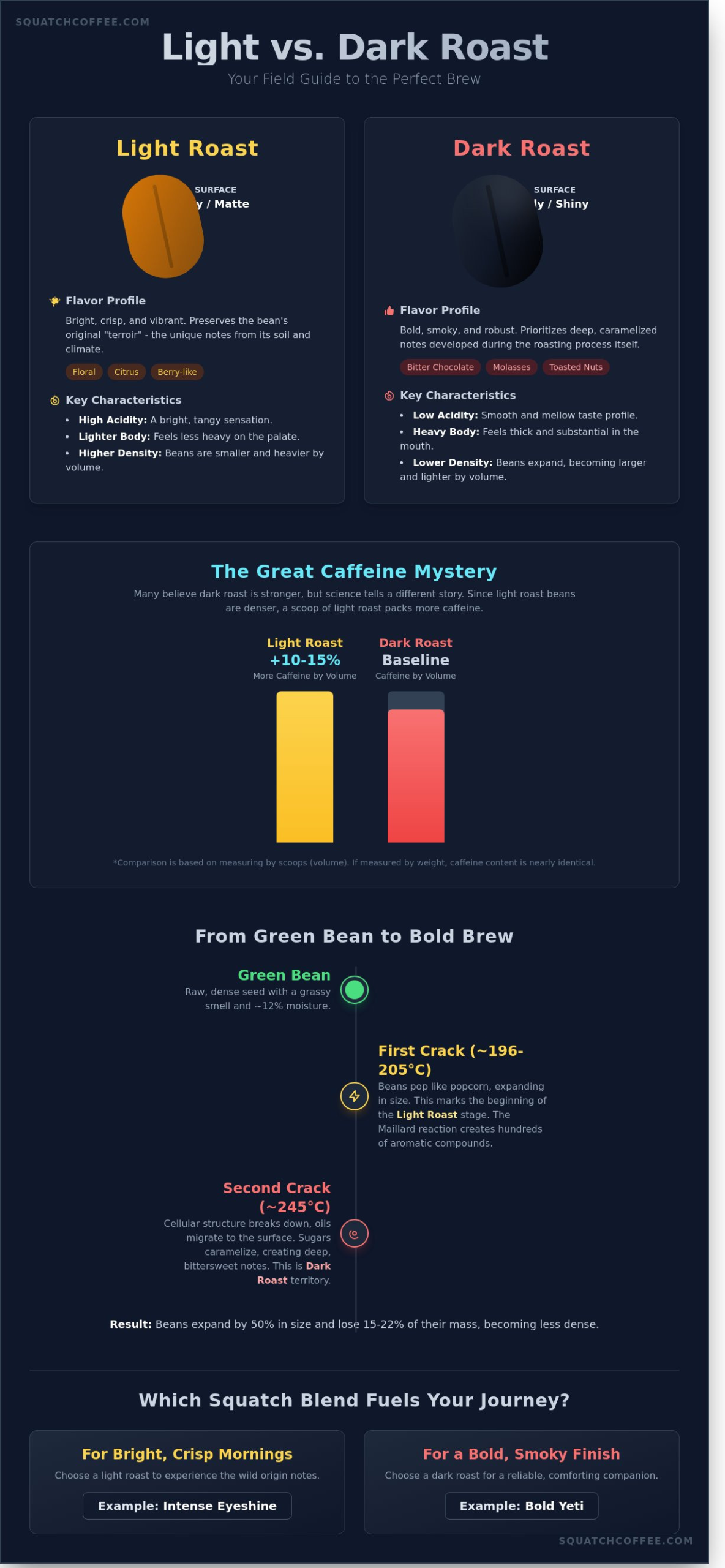
Strength is often a misleading term in the wild. Many explorers believe a dark roast provides a bigger caffeine kick because of its intense flavor. Science tells a different story. Caffeine is remarkably stable during roasting. A 2017 study confirmed that caffeine levels barely budge even as beans darken. However, beans lose about 15% to 22% of their mass as they stay in the drum longer. Since light roast beans are denser, a scoop of light roast actually contains roughly 10 to 15 milligrams more caffeine than a scoop of dark roast. If you want maximum fuel for a long haul, the lighter side of the light roast vs dark roast debate might be your best bet.
What is Light Roast Coffee?
Light roast is the untamed version of the bean. These beans are pulled from the heat just after the “first crack,” usually at internal temperatures between 196 and 205 degrees Celsius. They appear light brown and have a dry surface because the oils haven’t been forced out by the heat yet. You’ll taste the high-altitude origins, often exceeding 1,500 meters, where the air is thin and the flavors are crisp. Expect bright acidity with floral, citrus, and berry-like profiles. It’s a vibrant wake-up call for the senses.
What is Dark Roast Coffee?
Dark roast is the sturdy campfire of the coffee world. These beans stay in the roaster until the “second crack,” reaching temperatures near 245 degrees Celsius. This process draws oils to the surface, creating a shiny, dark brown or nearly black appearance. The original origin flavors take a backseat to the bold notes of the roast itself. You’ll experience low acidity and a heavy body. Common flavor notes include bitter chocolate, molasses, and toasted nuts. It’s a reliable, comforting companion for those who prefer a szilaj, smoky finish to their brew.
Finding your path requires experimentation. Some days demand the bright, acidic spark of a light roast to clear the fog. Other mornings require the heavy, chocolatey weight of a dark roast to anchor your spirit. Neither is superior; they’re just different tools for different terrains. Trust your palate, embrace the mystery of the bean, and choose the fuel that keeps your legend growing. The trail is waiting, and your perfect roast is the first step toward conquering it.
The Roasting Process: From Green Bean to Bold Brew
Before it hits your mug, coffee is a dense, green seed. It’s hard enough to break a tooth and smells like fresh-cut grass. Heat changes everything. We take these raw seeds and subject them to temperatures reaching 450°F. This isn’t just cooking; it’s a controlled explosion of flavor. In our Pacific Northwest roastery, we watch for two critical milestones that define the light roast vs dark roast debate. The transformation is physical, chemical, and legendary.
The First Crack happens around 385°F. The bean physically pops like popcorn as steam builds pressure and escapes. This marks the light roast stage. It preserves the wild, acidic notes of the bean’s origin, like the citrus of an Ethiopian highland or the berry notes of a Kenyan trail. If we keep the heat climbing, we hit the Second Crack at roughly 435°F. This is the territory of dark, smoky legends. The cellular structure breaks down; oils migrate to the surface. It’s intense fuel for the longest treks, trading bright acidity for deep, charred sweetness.
The Maillard Reaction and Caramelization
At 300°F, the Maillard reaction begins. Amino acids and sugars react to create over 800 aromatic compounds. This is the chemical magic that creates “roasty” aromas. Longer roasts push past this into caramelization, where sugars break down into bittersweet notes. A 12-minute roast might highlight crisp apple, while a 15-minute roast shifts toward dark chocolate and molasses. In a Sasquatch roastery, we balance this timing to ensure the bean doesn’t lose its original identity to the fire. We want the wildness of the forest, not just the taste of the charcoal.
Density and Weight Loss
Roasting is a game of evaporation. A green bean contains about 12% moisture. By the end of a dark roast, that number drops to nearly 2%. Beans expand by 50% in size during the process but lose 18% of their total weight. This explains the great caffeine mystery and why a bag of dark roast often looks fuller than a bag of light roast. Because dark beans are less dense, you need more of them by volume to reach the same weight as light beans. If you measure by the scoop, you’re getting different amounts of fuel. Always use a scale for a consistent brew on the trail.
We roast in small 25-pound batches. This allows our crew to track the “Roast Curve” with 1-degree precision every 30 seconds. Large industrial roasters can’t match this level of detail. Freshness is the ultimate goal. When you grab a bag of freshly roasted beans, you’re getting peak chemical energy. Our PNW air helps cool the beans rapidly after they leave the drum, locking in those volatile aromas before they vanish into the wilderness. It’s the difference between a dull spark and a roaring campfire. The light roast vs dark roast choice ultimately depends on which flavor profile ignites your spirit for the day ahead.
Flavor Profiles and the Great Caffeine Mystery
Stop believing the old campfire tales. Most hikers think a dark, oily bean is a high-octane rocket fuel that provides double the energy. It’s a common misconception that keeps people from exploring the full spectrum of the trail. Caffeine stays remarkably stable during the 12 to 15 minutes of a typical roast cycle. The heat doesn’t actually burn the caffeine away in any significant amount. The real shift happens in the physical structure and density of the bean itself. Light roast beans are denser, meaning they often pack more caffeine per bean than their dark roast counterparts. If you measure your morning fuel by the scoop rather than a digital scale, you’ll likely ingest more caffeine with a light roast because the beans are smaller and heavier. A 12-ounce cup brewed with light beans often contains between 120 and 150 milligrams of caffeine. The same volume of dark roast might drop to 110 milligrams if you don’t adjust your measurements.
The Caffeine Content Truth
Precision is the key to a legendary brew. When you roast coffee, the beans lose about 15% to 20% of their mass through water loss. Dark roast beans puff up and become larger but much lighter. If you use a scoop, you’re getting less actual coffee mass in your dripper. Harvard research on coffee highlights how these different chemical compositions and roasting levels impact your daily health profile. To get the same caffeine kick from a dark roast, you simply need to use a scale and weigh out more beans to compensate for the lost density.
Acidity vs. Bitterness: Finding Your Balance
Your palate acts as a compass on the flavor trail. Light roasts preserve the “brightness” of the bean. This isn’t the kind of acid that gives you a stomach ache; it’s the crisp, zesty sensation you find in a Granny Smith apple or a fresh lemon. These beans contain over 800 volatile aromatic compounds that stay intact because they haven’t been scorched by high heat. It’s the perfect choice for a brisk morning when you want to feel every detail of the wilderness around you.
Dark roasts take a different path through the woods. As the temperature climbs past 430 degrees Fahrenheit, the sugars in the bean caramelize and eventually begin to carbonize. This process creates the “boldness” that many coffee drinkers associate with a traditional cup. You’ll taste notes of dark chocolate, toasted nuts, or even a hint of campfire smoke. This heavy profile is ideal for those “Squatchy” morning moods when you need a thick, comforting cup to shake off the mountain chill.
The “body” of your coffee is another crucial factor in the light roast vs dark roast decision. Light roasts are often described as tea-like or delicate. They have a thin texture that lets the floral and fruity notes shine through. Dark roasts are the heavy-duty gear of the coffee world. They feel syrupy and viscous on the tongue because the roasting process forces natural oils to the surface of the bean. These oils provide that lingering, velvety finish that stands up well to a splash of cream or milk.
Don’t confuse roast level with the “strength” of your brew. Strength is a measurement of the coffee-to-water ratio, not the color of the bean. A standard 1:16 ratio (1 gram of coffee for every 16 grams of water) is the gold standard for most explorers. If you want a cup that hits like a ton of bricks, use more grounds. The light roast vs dark roast choice is about the character and flavor of your fuel, while the brewing ratio determines the horsepower. Pick the roast that fits your taste, then dial in the ratio to power your next adventure.
Trail-Ready Selection: Which Roast Suits Your Adventure?
Your pack’s ready and the 4:30 AM alarm just signaled the start of a legendary trek. Choosing between a light roast vs dark roast isn’t just about flavor preference; it’s about matching your fuel to the terrain. If you’re standing in the thick mist of an Oregon morning, you need a cup that cuts through the damp chill. A bright, acidic light roast acts like a headlamp for your senses. By contrast, a high-noon hike under a scorching sun demands the heavy, chocolatey reliability of a dark roast that won’t turn sour in your thermos.
Equipment dictates your results. You wouldn’t wear flip-flops on a scree slope, so don’t use a delicate pour-over cone for a coarse-ground dark roast. Darker beans are more soluble. They give up their oils quickly. Light roasts are dense and stubborn. They require precision and heat to surrender those hidden floral notes. Your choice of milk matters too. If you carry heavy cream or powdered fats, stick to dark roasts. The 15% fat content in standard trail creamers will bury the subtle peach or jasmine notes of a light roast, leaving you with a cup of hot, beige water.
Best Brewing Methods for Light Roasts
Think of the Pour Over or Chemex as a high-definition lens. These methods highlight the complex acidity that defines the light roast vs dark roast debate. On the trail, use an Aeropress with a 2-minute steep time to extract those wild, berry-like flavors. Keep your water temperature between 202 and 205 degrees Fahrenheit. If your water drops below 195 degrees, your light roast will taste like sour grass rather than a legendary sunrise.
Best Brewing Methods for Dark Roasts
Dark roasts are the undisputed kings of the campfire. The French Press is your best tool here. It coaxes out a heavy, legendary body that stays bold even after a 3-mile climb. For those who need serious “Eyeshine” fuel, the Moka Pot delivers an espresso-style kick that powers you through the final 1,000 feet of elevation. A percolator also works wonders, as the intense heat caramelizes the sugars in dark beans, creating a smoky sweetness that pairs perfectly with woodsmoke.
Freshness is a non-negotiable law of the wild. Once a bean is roasted, the clock starts ticking. You have a 14-day window before the “wild” flavor profile begins to flatten into cardboard. Oxygen is the enemy. Store your beans in a vacuum-sealed, opaque canister rather than a flimsy plastic bag. High altitude accelerates degassing. If you’re camping above 5,000 feet, your beans will lose their punch 25% faster than at sea level. Keep them sealed tight until the moment you grind.
Grinding just before brewing is the secret to a cup that tastes like the great outdoors. Pre-ground coffee loses 60% of its aroma within 15 minutes of exposure to air. Invest in a rugged hand grinder. It’s a few extra ounces in your pack, but the payoff is a cup of fuel that tastes as vast and untamed as the forest itself. Whether you’re chasing a summit or a legend, your coffee should be as tough as your boots.
Grab our legendary roast samples and find your trail partner.
Join the Hunt: Finding Your Perfect Sasquatch Blend
You’ve analyzed the data. You’ve weighed the caffeine content and the chemical profiles. Now, the real mission begins. Choosing between light roast vs dark roast isn’t just a matter of taste; it’s about selecting the right fuel for your specific journey. At The Sasquatch Coffee Company, we don’t do generic. We roast for the explorers, the early risers, and the ones who find peace in the deep woods. Since our founding in 2018, we’ve focused on small-batch precision to ensure every bag packs a legendary punch.
Our Eyeshine Blend stands as the peak of our dark roast lineup. It’s designed for those who need a heavy hitter. This blend features 100 percent Arabica beans sourced from high-altitude regions, roasted until they develop a signature oily sheen. It’s bold, unapologetic, and cuts through the morning fog like a high-powered flashlight. If you want a cup that feels as substantial as the Pacific Northwest timberline, this is your target.
For those who prefer a bit of mystery with their caffeine, the Yeti Blend offers a different kind of darkness. It’s a deep, shadowy roast that thrives in cold climates. We developed this specifically for those 4:00 AM starts when the frost is still thick on the windshield. It provides a heavy body and a lingering finish that keeps you warm long after the first sip. We roast these beans in small 50-pound batches to maintain total control over the heat, ensuring we never scorch the soul out of the bean.
Our process reflects our home in the Pacific Northwest. We don’t believe in mass production. Instead, we follow a strict 48-hour window from roaster to shipping. This ensures that when you break the seal, you’re getting the freshest possible experience. It’s about honesty and grit. We use 1200-foot elevation profiles to guide our temperature curves, resulting in a cup that’s as rugged as the terrain we call home. A coffee subscription is the smartest way to keep your pantry stocked. You’ll save 15 percent on every order and ensure you never face a morning without fuel. You can’t hunt legends on an empty tank.
Eyeshine vs. Yeti: The Dark Roast Showdown
The choice between Eyeshine and Yeti depends on your flavor map. Eyeshine hits you with heavy notes of blackstrap molasses and dark cocoa; it’s the perfect companion for a sunrise at Rockaway Beach where the salt air meets the smoke of a driftwood fire. Yeti leans into the shadows with earthy cedar and toasted walnut undertones. Both blends embody the spirit of The Sasquatch Coffee Company: bold, resilient, and always ready for what’s around the next bend in the trail.
Fuel Your Adventure Today
Don’t settle for the bland or the basic. Stepping out of your comfort zone is where the best stories happen. Whether you are still debating the merits of light roast vs dark roast or you’re ready to dive into the deep end, our beans are the gear you need. We stand by every bag with The Sasquatch Coffee Company guarantee: if it isn’t the freshest, boldest coffee you’ve ever hauled into the wild, we’ll make it right. The trail is calling, and it’s time to answer. Grab your next bag of legendary beans from The Sasquatch Coffee Company here!
Claim Your Peak with the Perfect Brew
The trail doesn’t care how you take your coffee, but your performance does. You’ve learned that the light roast vs dark roast choice is really about matching your fuel to your specific mission. Light roasts preserve the bean’s natural acidity and caffeine for those 5:00 AM summit pushes. Dark roasts offer the bold, smoky depth that anchors a long night at basecamp. Since 2014, we’ve been small-batch roasting every bean in Rockaway Beach, Oregon, to meet the demands of the wild. We’ve spent over 10 years perfecting legendary blends like the citrusy Eyeshine and the heavy-hitting Yeti. These aren’t just drinks; they’re tools for discovery used by PNW explorers for a decade.
Don’t head into the woods with weak beans that can’t keep up with your pace. Your gear is packed and the map is set, so make sure your thermos is filled with something legendary. Grab the roast that speaks to your spirit and provides the energy to reach the next ridge. Fuel your next adventure with Sasquatch Coffee! Keep your eyes open and your mug full.
Frequently Asked Questions
Does dark roast coffee have more caffeine than light roast?
Light roast coffee actually contains more caffeine by volume because the beans remain denser during the shorter roasting process. A single 10 gram scoop of light beans packs roughly 15% more caffeine than the same volume of dark beans. If you measure your fuel by the scoop, light roast provides a bigger kick for your morning trek. Measuring by weight makes the caffeine levels nearly identical, so grab a scale for total precision.
Which coffee roast is easiest on the stomach?
Dark roast coffee is significantly easier on the stomach because it contains a specific compound that limits acid production. A 2010 study presented at the American Chemical Society found that dark roasts produce N-methylpyridinium, which tells your stomach to stop pumping out hydrochloric acid. This reduces the 30% chance of heartburn many hikers face after a strong cup. It’s the best choice if you want to stay focused on the trail without digestive distractions.
Is light roast coffee more acidic than dark roast?
Yes, light roast coffee is more acidic and maintains a pH level around 4.7 on average. When comparing light roast vs dark roast, the shorter heat exposure preserves the organic acids that create bright, fruity flavors. Dark roasts lose these compounds during the 12 to 15 minutes they spend in the roaster. If you enjoy a crisp, citrus finish that tastes like a mountain sunrise, the light roast is your legendary companion.
What is the best roast for a French Press?
Dark roast is the superior choice for a French Press because its natural oils stand up to the long 4 minute immersion time. The metal mesh filter allows those heavy oils to pass through, creating a bold, full-bodied cup with zero sediment. Light roasts often taste thin or overly tea-like when brewed this way. Stick with a dark, smoky bean to get that rugged, earthy flavor that fuels a long day of exploring the wild.
Does light roast coffee taste like tea?
Light roast coffee often has a tea-like body because it lacks the heavy oils and caramelized sugars found in darker beans. High-altitude Ethiopian beans frequently score 88 or higher on the specialty scale for their delicate, floral notes. These beans offer a complex profile of jasmine and bergamot rather than the traditional chocolate taste. It’s a sophisticated brew for those who want to experience the hidden, subtle flavors of the wilderness.
How long does roasted coffee stay fresh in the woods?
Roasted coffee stays at peak freshness for exactly 7 days when stored in a sealed, valved bag at camp. Once you open that seal, oxidation increases by 50% every 24 hours due to humidity and air exposure. We recommend grinding your beans right before you boil the water to lock in the legendary aroma. Keep your stash in a cool, shaded spot in your pack to prevent the oils from turning rancid in the sun.
Can I use dark roast for a pour-over?
You can definitely use dark roast for a pour-over, but you must drop your water temperature to 195 degrees Fahrenheit. Using boiling water on dark beans causes over-extraction, which leads to a 20% increase in bitter flavors. A slower pour with slightly cooler water highlights the smoky, toasted notes without the burnt aftertaste. It’s a great way to enjoy a clean, sediment-free cup of your favorite bold fuel while sitting by the fire.
Why is my light roast coffee tasting sour?
Your light roast tastes sour because of under-extraction, which means the water didn’t pull enough flavor from the dense beans. This happens 90% of the time when your water is too cold or your grind size is larger than 1 millimeter. Light roasts are harder than dark ones and require more energy to break down. Use water heated to 205 degrees Fahrenheit and try a finer grind to turn that sourness into a sweet, legendary finish.