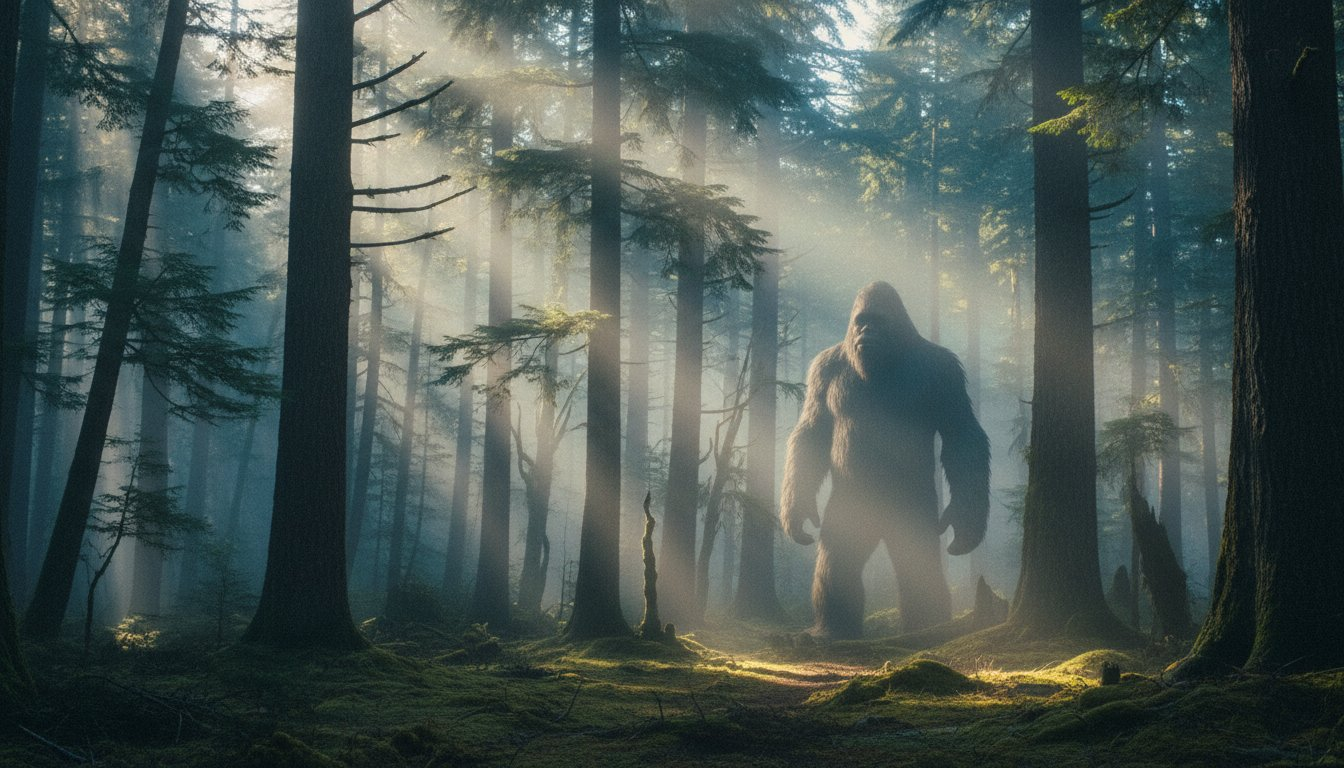
What if the snapping branch you heard at 4:00 AM in the Gifford Pinchot National Forest wasn’t a falling limb, but a 900-pound shadow watching from the treeline? You’ve felt that heavy silence in the woods. It’s the reason over 2,000 people reported sightings in Washington state alone since the 1960s. You know the Pacific Northwest isn’t just a map of coordinates; it’s a living mystery defined by sasquatch folklore pnw.
Finding the “vibe” of the legend often gets lost in dry scientific papers or blurry photos. This guide explores the deep history of the story, tracing it from 10,000-year-old Indigenous oral histories to the modern trails where the myth feels most alive. You’ll discover the cultural impact of the “Wild Man” and the top three spots to experience the folklore for yourself. Grab your boots and your favorite brew. We’re heading deep into the brush to find the truth behind the tracks.
Key Takeaways
- Trace the legend from its ancient Indigenous roots to the 1967 film that changed cryptozoology forever.
- Map out your next expedition to legendary hotspots like the Gifford Pinchot National Forest, the unofficial capital of sightings.
- Immerse yourself in the mystery of sasquatch folklore pnw by visiting local museums and joining guided “Squatch walks.”
- Learn how to turn your curiosity into action by attending regional festivals and locating the world’s only Sasquatch trap.
- Discover why every great forest adventure requires the right fuel to keep your spirit sharp and your eyes on the treeline.
What is Sasquatch? The Origins of the PNW Legend
He is the shadow moving through the Douglas firs. He is the heavy footfall that stops when you turn your head. Sasquatch is a massive, bipedal, ape-like hominid that stands as the undisputed king of Pacific Northwest folklore. While skeptics look for footprints, believers know he represents something deeper than a biological curiosity. The Pacific Northwest is the global epicenter for these sightings; Washington State alone boasts over 700 reported encounters according to the Bigfoot Field Researchers Organization. This region provides the perfect habitat for a legend to breathe, thrive, and hide.
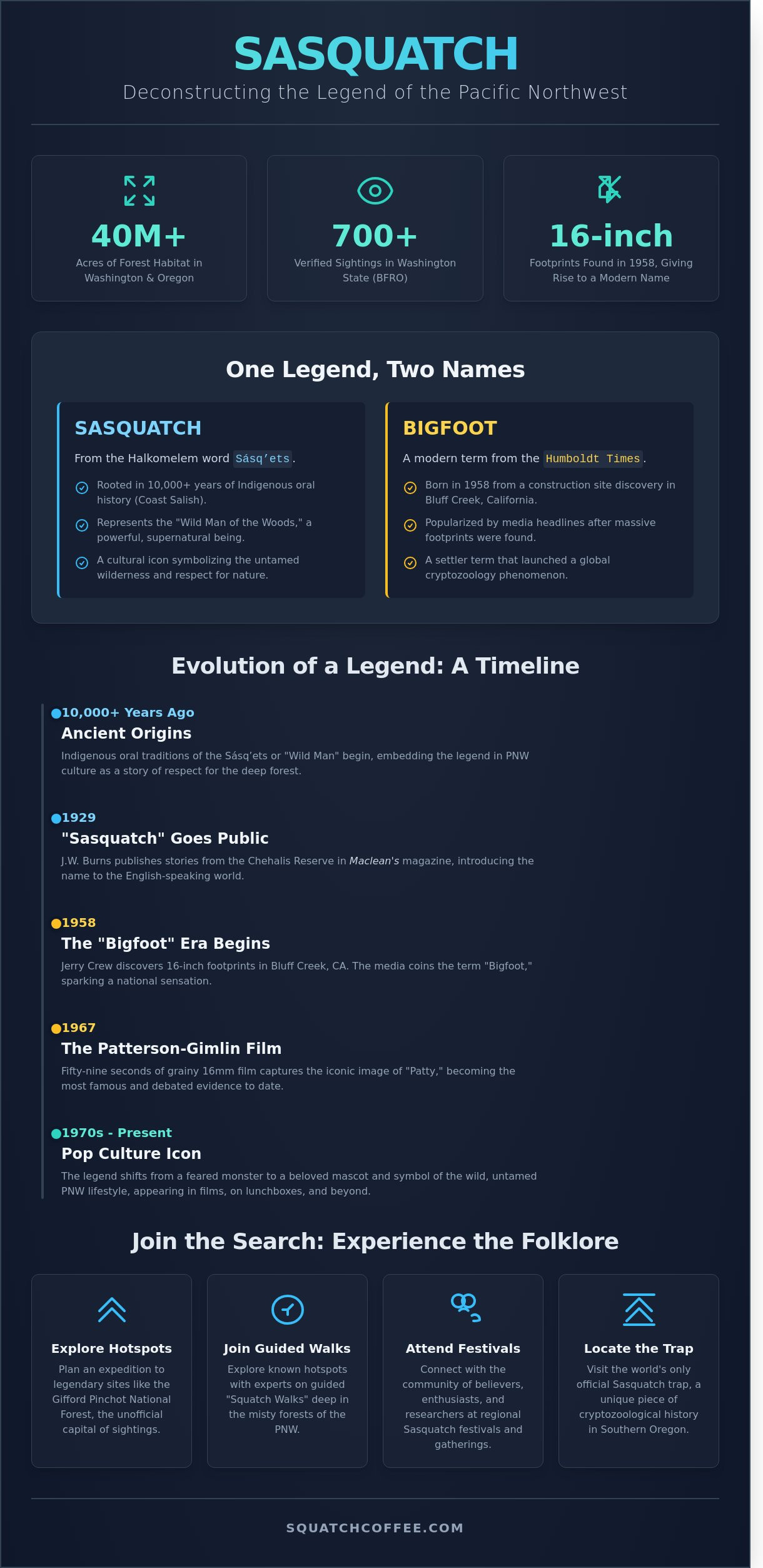
Most people use the names “Bigfoot” and “Sasquatch” interchangeably, but they come from very different worlds. The term “Bigfoot” is a modern addition to our vocabulary. It gained massive traction in 1958 after a logging foreman named Jerry Crew found massive footprints at a construction site in Bluff Creek, California. For a deeper look at how this term evolved into a global phenomenon, you can explore the Bigfoot Wikipedia page. While “Bigfoot” is a settler term born from newspaper headlines, “Sasquatch” carries the weight of centuries. When you dive into the deep history of sasquatch folklore pnw, you find a story that predates modern trail maps by generations. Sasquatch is a cultural icon representing the untamed wilderness of the Northwest.
Indigenous Roots: The Sasquits and Beyond
The name Sasquatch is an anglicized version of the Halkomelem word Sásq’ets. This term belongs to the Coast Salish people, specifically the Sts’ailes First Nation in British Columbia. In tribal storytelling, he is often described as the “Wild Man of the Woods.” He wasn’t a monster to be hunted for sport; he was a powerful, supernatural being who lived between the physical and spiritual realms. These legends served as vital warnings to the community. They taught people to respect the power of nature and the danger of the deep forest. If you didn’t respect the mountains, the Sásq’ets would ensure you felt his presence. This connection to the land is why sasquatch folklore pnw remains the gold standard for outdoor mysteries. It’s about a relationship with the wild that goes back thousands of years.
From Oral Tradition to Global Mystery
The transition from tribal stories to mainstream news happened in the 1920s. A schoolteacher and Indian Agent named J.W. Burns began collecting stories from the Chehalis Reserve. In 1929, he published an article in Maclean’s magazine that introduced the word “Sasquatch” to the broader public. The timing was perfect. As people moved into the rugged terrain of the Northwest for logging and mining, they encountered a landscape that felt alive. Washington and Oregon contain over 40 million combined acres of forest land. The dense canopy and constant mist create a natural veil that preserves the mystery. This isn’t just a biological hunt for a primate; it’s the preservation of a cultural legend. We don’t need a body in a lab to feel the power of the Squatch. We just need a fresh pot of coffee and the courage to look into the treeline. The legend is the fuel that keeps the spirit of exploration alive in every hiker and coffee lover who calls the PNW home.
The Evolution of the Legend: From Sightings to Pop Culture
The transition from whispered tribal stories to global phenomenon didn’t happen overnight. It took a muddy construction site in 1958 to give the beast its modern name. When Jerry Crew discovered massive, 16-inch footprints at a road-building site in Bluff Creek, California, the local Humboldt Times coined the term “Bigfoot.” Before this, the creature was known primarily through diverse indigenous oral traditions. Deeply rooted in sasquatch folklore pnw, the story took a massive turn as the media realized that mystery sells. The world was hooked on the idea of a giant, elusive primate roaming the dense evergreens of the Pacific Northwest.
By the 1970s, the narrative shifted. The terrifying monster of the woods became a kitschy cultural icon. Sasquatch started appearing on lunchboxes, in low-budget documentaries, and eventually as the star of 1987’s Harry and the Hendersons. This era transformed the legend into a beloved mascot for the region. It wasn’t just about fear anymore; it was about a connection to the untamed wild. Today, the “Squatchy” lifestyle represents a rebellion against the sanitized, digital world. People don’t just want to see Bigfoot; they want to embody the freedom he represents. Grab your gear, lace up your boots, and fuel your own morning trek with a freshly roasted bag of adventure before you head into the treeline.
The 1967 Film: Fact, Fiction, or Folklore?
On October 20, 1967, Roger Patterson and Bob Gimlin captured 59 seconds of 16mm film that changed everything. The 953 frames of grainy footage show a female Sasquatch, later named “Patty,” stride across a sandbar. For scientists, it remains a point of intense skepticism. For the public, it provided the definitive visual template for the creature. The heavy, non-human gait and the distinct sagittal crest became the “look” that defined sasquatch folklore pnw for the next six decades. Whether you believe it’s a man in a suit or a biological reality, that film cemented the legend in the American psyche.
Bigfoot in the Modern PNW Identity
In 2026, Sasquatch is more than a myth; he’s an economic powerhouse. Local festivals like the Oregon Bigfoot Festival draw thousands of enthusiasts annually, contributing millions to local economies. For those digging into the history, Oregon’s Bigfoot Legend provides an essential look at how these stories shaped the region’s cultural backbone. This fascination has birthed a new era of eco-tourism. “Squatch hunting” has evolved into a legitimate form of wilderness exploration, where the goal is less about capture and more about unplugging from technology.
- The 60% Rise: Search interest in PNW wilderness retreats has grown by 60% since 2022 as people seek “Squatchy” solitude.
- Museum Culture: The North American Bigfoot Center in Boring, Oregon, serves as a hub for both serious researchers and curious tourists.
- State Identity: Washington and Oregon consistently rank as the top two states for reported sightings, with over 3,000 entries in the BFRO database.
The legend persists because we need it to. In a world where every square inch of the planet is mapped by satellites, the idea of something hidden in the shadows of the Cascades is exhilarating. It reminds us that the wild still has secrets. It tells us that there’s always one more trail to explore, one more peak to climb, and one more mystery waiting just beyond the campfire light. Keep your eyes open and your coffee strong.
Where the Legends Live: Top Sasquatch Hotspots in the PNW
The Pacific Northwest isn’t just a grid of coordinates on a map. It’s a living, breathing landscape of the unexplained. If you’re hunting for more than just a scenic overlook, you need to know where the shadows move. From the moss-drenched peaks of Washington to the rugged Oregon coastline, sasquatch folklore pnw is etched into the very soil. Grab your thermos and check your gear. We’re heading into the deep woods where the big guy roams.
Gifford Pinchot National Forest stands as the undisputed heavy hitter in the world of cryptozoology. Covering 1.3 million acres of old-growth timber, this wilderness has hosted hundreds of reported encounters over the last century. It’s the unofficial capital of sightings for a reason. The terrain is brutal; the cover is thick. It’s the perfect place for a 700-pound legend to vanish into thin air. Further south, the Siskiyou National Forest holds a unique piece of history. In 1974, researchers built the world’s only official Sasquatch trap near Applegate Lake. It’s a massive iron box designed to catch a giant. It sits empty today, but the stories surrounding that site remain as heavy as the steel bars.
The Olympic Peninsula offers its own brand of eerie mystery. Explorers often refer to the area near the Quinault River as the “Valley of the Silent Men.” Local tribes and hikers have shared accounts of strange whistles and stone-throwing dating back to the late 1800s. To truly understand the depth of these stories, you can dive into the Oregon Encyclopedia’s history of the Sasquatch legend, which tracks how these tales transitioned from ancient oral traditions to modern cultural phenomena. This history proves that the legend isn’t just a campfire story; it’s a pillar of regional identity.
Oregon’s “Squatchy” Coastline
The Tillamook State Forest isn’t just for gearheads and loggers. It’s a corridor of dense canopy where the woods meet the Pacific mist. In Rockaway Beach, the theme is everywhere. Local shops and roadside stops feature massive cedar carvings that stand over 10 feet tall, celebrating the creature’s presence. If you’re camping near the coast, watch the tree line at dusk. Experienced trackers look for “eyeshine.” This is the distinct reflection of light off a predator’s eyes. Use a red-lens flashlight to preserve your night vision. You might just see two amber orbs staring back from the brush.
Washington’s Hairy Giants
Mount St. Helens is ground zero for legendary encounters. The 1924 Ape Canyon incident remains the gold standard for sasquatch folklore pnw. A group of miners claimed their cabin was bombarded with boulders by “ape-men” for an entire night. Washington leads the nation with over 2,032 documented sightings according to the BFRO database. The Cascades offer the perfect high-altitude sanctuary for something that doesn’t want to be found. If you’re venturing into Squatch territory, stay sharp and follow these rules:
- Pack high-calorie fuel: Cold mountain air drains your energy fast. A thermos of strong coffee is non-negotiable.
- Check the weather: Conditions change in minutes at 4,000 feet. Always carry an emergency shell.
- Respect the wild: Never track a large animal alone. The woods are bigger than your ego.
- Leave a trail map: Ensure someone knows your exact return time and location.
The wilderness doesn’t care about your weekend plans. It demands respect and preparation. Whether you’re a hardcore believer or a skeptic looking for an excuse to hike, the energy in these forests is undeniable. Lace up your boots. Fill your mug. The trail is waiting, and something might be watching.
How to Experience Sasquatch Folklore Today
The Pacific Northwest isn’t just a map of coordinates; it’s a 1.3 million-acre playground for the imagination. To truly understand sasquatch folklore pnw, you have to step off the pavement. Start your journey at the North American Bigfoot Center in Boring, Oregon. Opened in 2019 by researcher Cliff Barackman, this museum houses one of the largest collections of footprint casts in the world. It’s the perfect baseline for any investigator. You’ll see evidence collected over 50 years of research. It turns the abstract into something you can almost touch.
If you crave a community experience, head to the Oregon Bigfoot Festival. This event draws over 5,000 enthusiasts every summer to the banks of the Columbia River. It’s a place where skeptics and believers share stories over local brews. These gatherings keep the sasquatch folklore pnw alive by passing oral traditions to a new generation. You aren’t just reading about a myth; you’re participating in a living cultural phenomenon that defines the region’s identity.
Walking these woods requires more than just a pair of binoculars. You need to know what to do if the mystery reveals itself. If you find a “footprint,” don’t rush to touch it. Use a ruler or a common object like a coin to establish scale in photos. Take shots from three different angles to capture the depth of the heel and toe impressions. Serious hunters carry a plaster of Paris kit to create a permanent record. Documentation is the bridge between a campfire story and a scientific discovery.
Sustainable Squatching: Respecting the Habitat
Respect the woods or the legend dies with the trees. Follow the seven Leave No Trace principles every time you enter the backcountry. Statistics show that 80% of human-wildlife conflicts in the PNW stem from poor campsite management. Keep the forest wild. We “hunt” with high-definition lenses and quiet curiosity. Protecting the 1,000-year-old Douglas firs ensures the legend has a home for another century. If you don’t pack it in, don’t bring it out.
The Essential Gear for a Legend-Hunter
Every explorer needs a kit that won’t quit when the trail gets steep. You need rugged, waterproof boots with deep lugs for traction on basalt rocks. A field journal is vital for recording the time, weather, and specific bird calls that often precede a sighting. Most importantly, you need the right fuel. A cold morning in the Cascades requires a bold brew to sharpen your senses. Pack the Sasquatch Coffee Ceramic Mug for your morning ritual. It’s heavy duty and built to hold heat when the mountain temperature drops below 40 degrees. It’s the perfect companion for those quiet moments of observation before the sun hits the valley floor.
The search for the Sasquatch is a marathon, not a sprint. It requires patience, a keen eye, and a spirit that doesn’t mind a little rain. Whether you’re trekking through the Olympic Peninsula or sitting quietly by a fire in the Blue Mountains, the experience is about the connection to the wild. The legend is out there, waiting in the shadows of the timberline. Grab your gear and fuel your next expedition with a roast that’s as bold as the legend itself.
Fueling the Legend: Why Every Adventure Starts with Coffee
The woods don’t offer apologies for the cold. At 4:45 AM, when the dew point hits 50 degrees and visibility in the Cascades drops to fifteen feet, you need more than a standard caffeine kick. You need a ritual that matches the scale of the landscape. This is where the deep, smoky aroma of a fresh brew meets the ancient silence of the trees. The connection between a steaming mug and the early morning forest mist isn’t just atmospheric; it’s essential for survival in the wild. For those who track the shadows, a high-quality dark roast is the only fuel that makes sense. It provides the clarity needed to distinguish a wind-blown branch from something much larger moving through the brush.
The Sasquatch Coffee Company exists because we believe the sasquatch folklore pnw enthusiasts deserve a coffee that’s as bold as the legends they chase. We don’t settle for weak, watery blends that disappear in the mountain air. Every bean we roast is designed to capture the “Feelin’ Squatchy” spirit. This means embracing the mystery, the grit, and the raw energy of the wilderness. Whether you’re glassing a ridgeline or just trying to survive a Monday morning at the office, that first sip should feel like a step into the unknown. It’s about a mindset that refuses to stay on the paved path.
Our lineup pays direct tribute to the sightings that have defined the region for decades. From the heavy-hitting Eyeshine Blend to the complex notes of Howl in the Night, these aren’t just clever names. They represent the sensory experience of the deep woods. When you drink coffee named after the 3,000 plus documented sightings in the Pacific Northwest, you’re participating in a tradition of curiosity. The legend lives on because people keep looking, and we’re here to make sure they stay awake while they do it.
Small Batch Roasting for Big Legends
We treat our roasting process with the same respect hunters give to a fresh set of tracks. We don’t use massive, industrial machines that strip away character. Instead, we focus on small-batch roasting to ensure every 12-ounce bag meets our rigorous standards. This artisanal approach mirrors the rarity of the Sasquatch itself; it’s about quality over quantity. Our Eyeshine Blend serves as the ultimate campfire fuel, hitting the 440-degree roasting mark to pull out those intense, chocolatey undertones. You need these bold, dark flavors to cut through the damp chill of the Olympic Peninsula or the high deserts of Oregon. It’s coffee built for the 2,000-mile trekkers and the weekend warriors alike.
Join the Sasquatch Coffee Club
You don’t have to live in a cabin in the woods to keep the spirit alive. Our subscription service delivers the PNW experience to your doorstep anywhere in the country. It’s the most reliable way to ensure you’re stocked up for every 2026 adventure, from backcountry skiing to coastal hiking. Members get first access to limited runs and seasonal roasts that disappear faster than a footprint in the rain. Don’t let your pantry go bare when the mountains are calling. It’s time to upgrade your morning routine and embrace the mystery of the wild. Grab your gear and feelin’ squatchy today!
The legend of the Sasquatch isn’t just a story told around a fire; it’s a part of our regional identity. By choosing a coffee that honors this sasquatch folklore pnw, you’re keeping that sense of wonder alive. Every cup is a reminder that there are still places on the map where the wild wins. Every trail leads somewhere, and every great story starts with a strong pour. Keep your eyes open and your thermos full.
Fuel Your Next Expedition
The woods of the Pacific Northwest hold secrets that date back centuries. You’ve traced the roots of sasquatch folklore pnw from ancient tribal stories to modern sightings across the 1.3 million acres of the Gifford Pinchot National Forest. This legend isn’t just a myth; it’s a call to explore the unknown. Whether you’re trekking through the Cascades or scouting the Olympic Peninsula, every great discovery requires a clear head and a steady hand. You don’t want to hit the trail without the right preparation.
For over 10 years, Squatch Coffee has been the spark for these rugged journeys. We roast every bean in small batches in Rockaway Beach, Oregon, to ensure your fuel is as bold as the terrain. Our authentic Sasquatch-themed blends like Eyeshine and Yeti are built for those who find beauty in the shadows. Grab your gear and fill your mug. The trail is waiting, and the legend is closer than you think. It’s time to find what’s hiding in the treeline.
Explore our Legendary Coffee Blends and Gear
Frequently Asked Questions
Where did the name Sasquatch originally come from?
The name Sasquatch originates from the Halkomelem word Sásq’ets, which translates to “wild man” or “hairy man.” This term belongs to the Coast Salish indigenous peoples of British Columbia. It gained mainstream popularity in the 1920s when J.W. Burns, a government Indian Agent, compiled local stories for Maclean’s Magazine. His writings turned ancient tribal oral histories into a household name across North America.
Is there any scientific evidence for Bigfoot in the PNW?
No biological specimen has been recovered yet, but researchers like Dr. Jeff Meldrum from Idaho State University have analyzed over 300 footprint casts. These casts often show mid-tarsal breaks and dermal ridges that are difficult to fake. While physical bodies remain elusive, the rich history of sasquatch folklore pnw traditions is supported by these physical anomalies and thousands of documented reports since the 1950s.
What is the best time of year to visit Sasquatch hotspots in Oregon?
Plan your expedition between late June and September for the best access to high-elevation habitats. Data from the Bigfoot Field Researchers Organization shows that 75% of sightings occur during these warmer months when mountain passes are clear of snow. Areas like the Blue Mountains and Mount Hood National Forest offer the most rugged terrain for those looking to follow the legend’s trail.
Are there Bigfoot museums I can visit in the Pacific Northwest?
You should visit the North American Bigfoot Center in Boring, Oregon, which was opened in 2019 by researcher Cliff Barackman. This facility houses one of the largest collections of evidence in the world. Another great stop is the Expedition: Bigfoot! museum. These locations provide 1,000 square feet of exhibits, historical photos, and life-sized replicas that bring the mystery of the woods to life.
What should I do if I see something strange in the woods?
Keep your distance and stay calm while you reach for your camera. Use a device with at least 10x optical zoom to capture clear details from a safe range. Note your exact GPS coordinates and the time of day immediately. You can report your encounter to the BFRO, which has maintained a public database of sightings since 1995 to help experts track migration patterns.
Why is Bigfoot so closely associated with coffee culture?
Bigfoot and coffee both represent the rugged, early-morning spirit of the Pacific Northwest wilderness. Coffee is the essential fuel for 4 AM expeditions into the mist where the legend lives. It’s about a lifestyle of grit and discovery. We roast our beans to provide that same bold energy you need to tackle a steep mountain trail or a long day at the office.
What are the most famous Sasquatch sightings in Washington state?
Washington state is a central hub for sasquatch folklore pnw enthusiasts, especially due to the 1924 Ape Canyon incident. During that event, a group of miners claimed their cabin was bombarded with rocks by several “ape-men.” Washington currently leads the United States with over 2,000 reported sightings. The 1982 Grays Harbor tracks also remain a pivotal moment in regional history for many dedicated researchers.
Can I buy Sasquatch-themed gifts and coffee online?
You can grab our legendary roasts and rugged gear directly from our online webstore. We ship 12-ounce bags of fresh-poured fuel and durable apparel to explorers across the country. Every purchase supports the spirit of the hunt and keeps the legend alive. Don’t wait for a sighting to get your hands on the best beans in the woods; order your stash today.