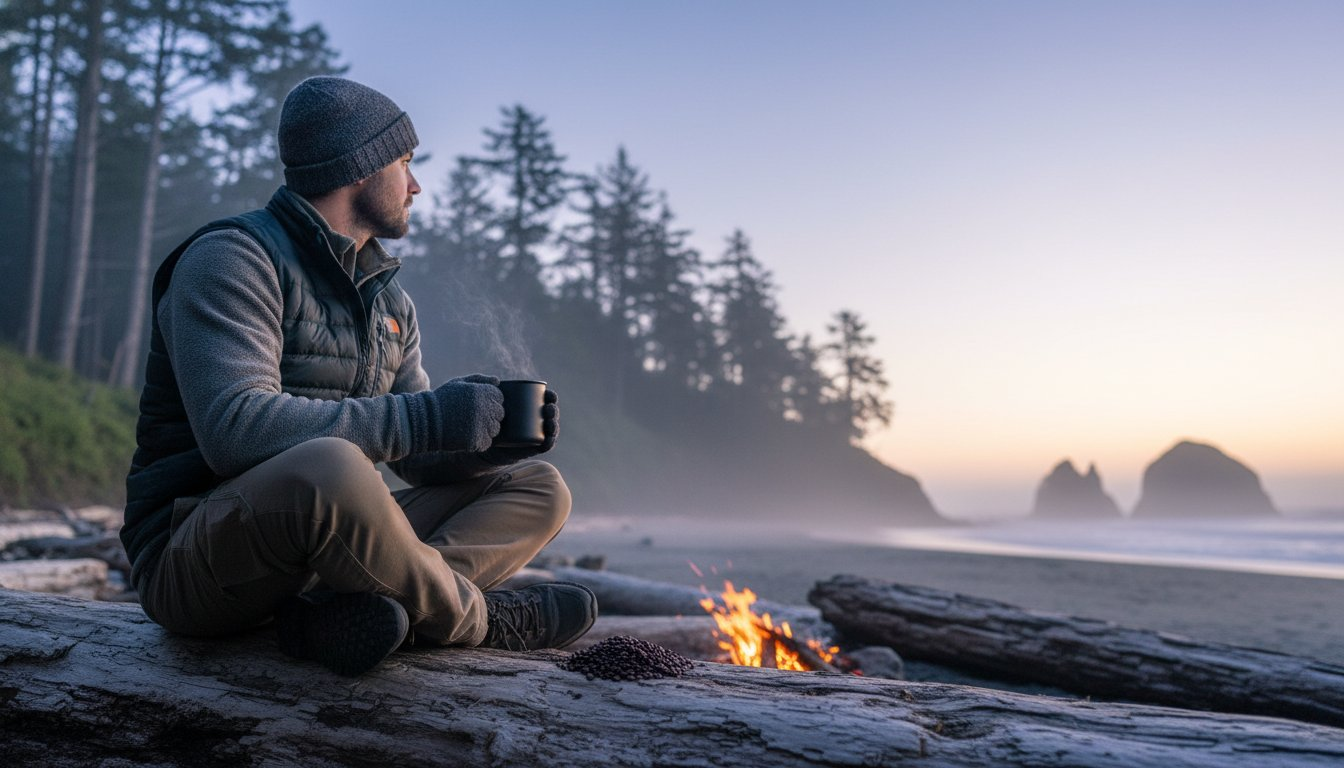
Most coffee drinkers think they’re tasting bold strength when they’re actually just swallowing a 450-degree mistake. It’s a common trap in the wilderness of the grocery aisle. You want a dark roast coffee that acts as high-octane fuel for your next summit, but instead, you get a cup that tastes like a forgotten campfire. You’ve likely experienced that sharp, ashy bitterness and wondered if bold is just a code word for burnt.
We agree that your morning brew should be a legendary experience, not a chore for your taste buds. You deserve a cup that packs a punch without the charcoal finish. This guide shows you how to choose a dark roast that delivers deep chocolate and smoky complexity without the harshness of mass-market brands. We’ll break down how to identify the top 15% of high-altitude beans and share the brewing secrets that eliminate 90% of unwanted bitterness. It’s time to find the fuel that matches your spirit.
Key Takeaways
- Learn to distinguish bold, high-quality dark roast coffee from industrial “charcoal” by identifying the signature oily sheen of the second crack.
- Optimize your brew by dropping your kettle temperature to 195°F to extract deep, smoky complexity without the burnt bitterness.
- Discover why heavy-bodied roasts are the traditional fuel for PNW explorers and the ultimate companion for your next campfire.
- Explore the mysterious profiles of our Eyeshine and Yeti blends to find a legendary cup that powers your toughest outdoor adventures.
What is Dark Roast Coffee? Understanding the Roast Spectrum
Dark roast coffee is the heavy-duty gear of the caffeine world. It’s built for those who crave a cup with enough backbone to stand up to a mountain frost or a 4:00 AM start. When you look at these beans, you’ll see a color ranging from deep mahogany to a midnight black. They shine with a visible oily coating that reflects the light. This isn’t a defect; it’s a badge of honor. As the beans spend more time in the heat, the internal oils migrate to the surface, creating that signature glisten. It’s a sign that the bean has been pushed to its limit to extract maximum boldness.
The flavor profile is a total departure from the floral, tea-like notes found in lighter varieties. You won’t find high, biting acidity here. Instead, you get a thick, syrupy mouthfeel that coats the tongue. It tastes like a campfire at midnight. Expect notes of bittersweet chocolate, toasted walnuts, and a hint of molasses. It’s the legendary choice for a serious wake-up call because it provides a consistent, bold punch every single time. Whether you’re staring down a steep trail or a long day at the office, this is the fuel that keeps the engine running.
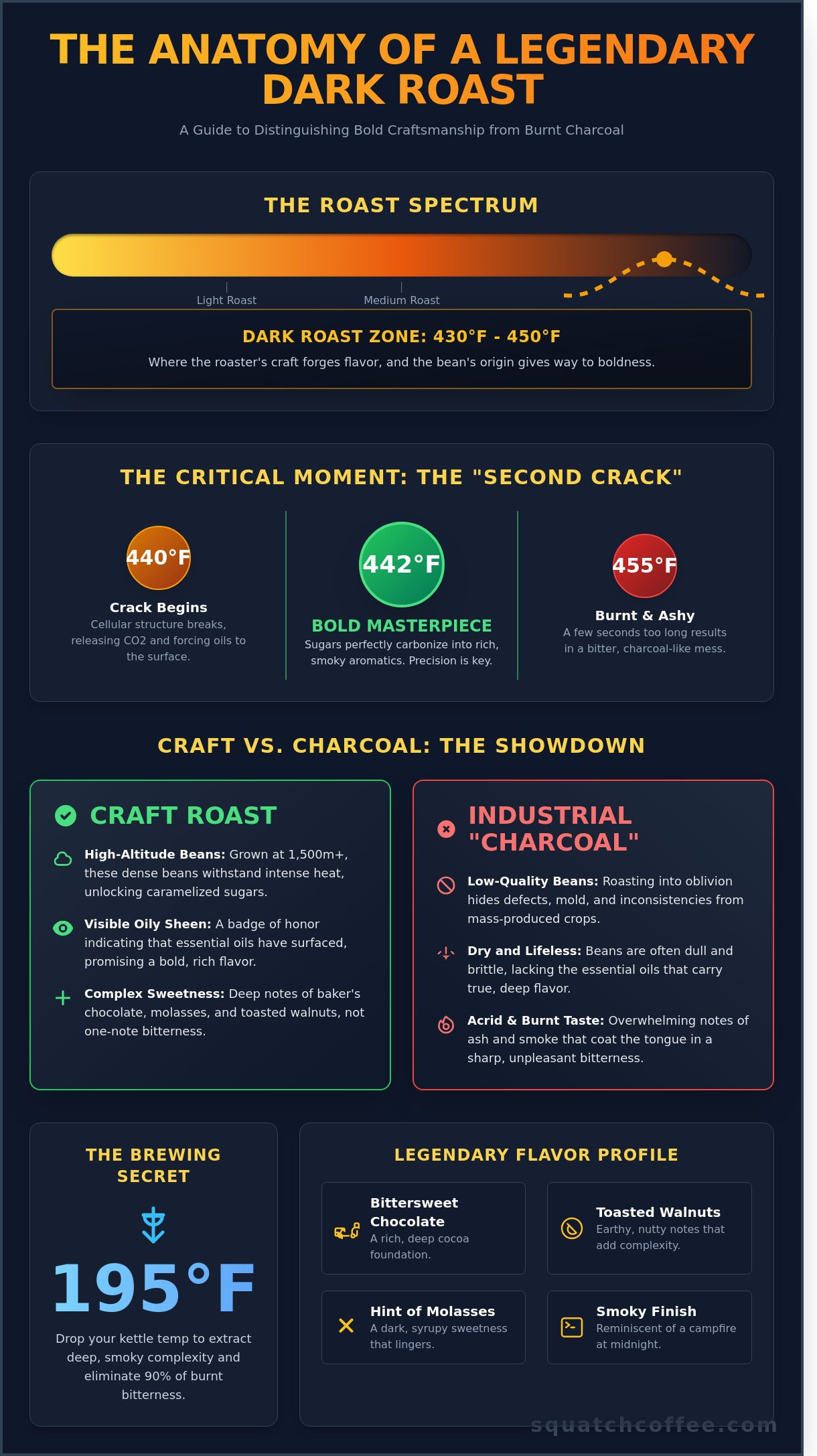
Understanding the fundamental mechanics of Coffee roasting helps you appreciate why dark roasts are so distinct from their lighter cousins. It’s a transformative process where chemistry meets fire, and the dark roast represents the final, most intense stage of that journey. This roast level is achieved when temperatures inside the drum climb between 430°F and 450°F. At this heat, the original characteristics of the green coffee bean fade away, replaced by the flavors of the roasting process itself. It’s about the craft of the roaster rather than the specific soil of the farm.
The Science of the Second Crack
The real magic happens at the 440°F mark. This is known as the “second crack.” Inside the roaster, the beans literally pop as their cellular structure breaks down under extreme pressure. This physical change releases CO2 and forces the essential oils to the exterior. The Maillard reaction goes into overdrive here. Sugars don’t just brown; they carbonize into rich, smoky aromatics. Timing is a game of seconds. Pulling the beans at 442°F creates a bold masterpiece, but waiting until 455°F results in a burnt, ashy mess. Precision is the only difference between a premium brew and charcoal.
Dark Roast vs. French Roast vs. Italian Roast
Don’t get confused by the names on the bag. These aren’t just marketing buzzwords; they represent specific levels of intensity on the spectrum. French Roast is the intense, smoky veteran of the group. It sits right at the edge of the roasting limits, offering a pungent aroma and a thin body. Italian Roast is the undisputed heavyweight champion. It’s roasted the longest, resulting in a nearly black bean with a charred sweetness. These are the roasts we use for espresso bases because their strength never fades. Even when you add milk or cream, the dark roast coffee profile cuts through with unwavering power.
Choosing a dark roast means you value strength and reliability. You aren’t looking for subtle hints of blueberry or jasmine. You want a cup that’s as szilaj and unyielding as the wilderness itself. It’s the ultimate fuel for the bold, designed to provide the energy needed to conquer any peak. When you brew a high-quality heavy roast, you’re tapping into a tradition of grit and determination that has fueled explorers for centuries.
The Craft vs. Charcoal Debate: Is Your Coffee Burnt or Bold?
The “Starbucks Effect” changed how the world sees dark coffee. Since 1971, industrial giants have pushed a “burnt” profile to ensure every cup tastes identical from Seattle to Seoul. It is a safety net for consistency. Industrial roasters often use this heavy-handed heat to mask defects in low-quality, mass-produced beans. If the crop is inconsistent or contains moldy “past crop” beans, roasting them into oblivion hides the flaws. You are left with a cup that tastes like a campfire’s remains. This approach prioritizes shelf life and uniformity over the actual soul of the bean.
Real craft roasting requires a different breed of bean. We select high-altitude Arabica grown at 1,500 meters or higher. These beans are dense; they possess the physical structure to withstand intense heat without shattering or turning to ash. When handled with care, a dark roast coffee reveals deep, caramelized sugars instead of acrid smoke. It is the difference between a perfectly seared ribeye and a piece of leather left on the grill too long. By Understanding Different Coffee Roasts, you can spot the nuance between a roast that highlights the bean and one that destroys it. High-quality dark roasts offer a complex sweetness, reminiscent of molasses or baker’s chocolate, rather than a one-note bitterness that coats the tongue in charcoal.
Identifying “Charcoal” Coffee
Check your beans for a heavy, greasy sheen. While some oil is expected in darker profiles, beans that look like they were dipped in motor oil are often over-roasted. This “slick” appearance means the internal cell structure has ruptured, pushing all the flavor-carrying lipids to the surface where they quickly oxidize. Look for a “Roasted On” date within the last 14 to 21 days. If your bag only shows an “Expiration Date” set 12 months in the future, you are buying stale inventory that lost its character long ago.
Why Small-Batch Roasting Matters
Precision is the name of the game in the wild. We roast in 25-pound batches to maintain total control over the thermal curve. Industrial roasters handle 500-pound loads where heat pockets are impossible to manage. Small-batch roasting lets us pull the beans at the exact second they hit peak sweetness. This preserves the “origin character” of the volcanic soil and high-altitude climate. Our Sasquatch philosophy means creating a dark roast coffee bold enough to wake the woods, yet smooth enough to drink black while watching the sunrise. Explore our legendary heavy roasts to experience fuel that does not bite back.
High-quality roasting is about finding the limit without crossing it. In the craft world, we treat the roaster like a precision tool, not a furnace. We want the strength of the wild with the refinement of a master scout. When you stop settling for burnt beans, you start tasting the actual adventure hidden inside the roast.
How to Brew Dark Roast Coffee for Maximum Flavor
Brewing a legendary cup of dark roast coffee requires a shift in your strategy. These beans have spent more time in the coffee roasting process, which fundamentally changes their physical structure. During this stage, they lose approximately 18% of their moisture and become significantly more porous than light roasts. This increased porosity means they’re highly soluble. They release their oils and flavors almost instantly when they hit hot water. If you treat them like a dense, light-roasted bean, you’ll end up with a bitter, over-extracted mess. You have to slow things down and control the energy you put into the brew.
Precision is your best tool in the kitchen or at the campsite. Start by dropping your water temperature. While many baristas aim for 205°F for specialty beans, you should dial your kettle back to 195°F. This 10-degree drop protects the delicate sugars and prevents the extraction of harsh, ashy tannins. Your grind size is the next critical factor. Aim for a coarse setting, similar to the texture of kosher salt. A finer grind increases the surface area, causing the water to pull out flavors too quickly. You want a controlled, steady extraction that highlights the chocolate and toasted nut notes without the burnt aftertaste. Stick to these metrics to ensure your fuel is smooth and powerful.
The French Press: The Dark Roast’s Best Friend
Immersion brewing is the ultimate way to experience the heavy body of a dark roast. Unlike paper filters that trap essential oils, the French Press lets them flow directly into your mug, creating a velvety mouthfeel. For a “Squatchy” morning cup, use 30 grams of coarse coffee and 450 grams of water. This 1:15 ratio creates a bold, viscous texture that stands up to the wild. Pour your 195°F water over the grounds, stir once to ensure total saturation, and let it steep for exactly 4 minutes. To avoid the muddy sediment often found at the bottom of the cup, don’t push the plunger all the way to the floor. Stop about 1 inch above the grounds. This keeps the silt trapped while the clean, rich coffee pours out into your thermos.
Temperature and Time Adjustments
Standard boiling water at 212°F is the enemy of a high-quality dark roast coffee. It acts too aggressively on the brittle bean structure, dissolving organic compounds at a rate that’s hard to control. Stick to the 195°F rule to keep the profile smooth and sweet. You also need to watch the clock closely. Most extraction happens in the first 120 seconds for dark roasts. Shorten your total brew time to avoid the bitter tail-end of the extraction cycle. If you’re using a Moka Pot, take it off the heat as soon as the coffee starts to turn pale or “blond.” This prevents the burnt flavor that plagues most home brews. A 1:15 ratio ensures your brew has enough kick to fuel a 10-mile hike. Adjusting these variables isn’t just science; it’s how you respect the bean and the craft.
The Moka Pot is another rugged favorite for those who crave intensity. It uses steam pressure to mimic espresso, pulling out the deep, smoky notes of the roast. To master it, pre-heat your water before filling the reservoir. This simple trick shortens the time the grounds sit on the hot stove, preventing the metallic, scorched taste that ruins a good morning. When the coffee starts to flow, look for a rich, hazelnut color. As soon as it lightens, run the base of the pot under cold water to stop the brew instantly. This level of control ensures every sip is as bold as the legend itself.
Dark Roast: The Ultimate Fuel for Outdoor Adventures
For explorers traversing the Cascade Range or the Olympic Peninsula, dark roast coffee isn’t just a beverage. It’s a legacy. This tradition stretches back to the logging camps of the late 1800s. Woodsmen relied on heavy roasts because they held their character when brewed with mineral-heavy spring water or over unpredictable flames. It remains the gold standard for PNW campers today. When the mist rolls off the Pacific at 5:00 AM, you don’t want a delicate, tea-like brew. You want something that fights the dampness. You want a cup that tastes like the wilderness itself.
The “Campfire Synergy” is a real sensory phenomenon. Chemically, dark roasted beans contain high concentrations of syringol and guaiacol. These are the same aromatic compounds found in wood smoke. When you sip a smoky roast next to a crackling cedar fire, the flavors align. The environment enhances the coffee; the coffee anchors the environment. It creates a seamless sensory loop. It’s why a bold cup tastes twice as good at a trailhead than it does in a sterile kitchen.
Durability is the secret weapon of the dark roast. During the roasting process, beans expand and become more porous. This physical change makes them easier to extract. If your camp stove struggles in the wind and your water only hits 185 degrees instead of the ideal 205, a dark roast still gives up its oils and sugars. Light roasts are stubborn; they require precision and high heat to avoid tasting sour. In the wild, precision is a luxury. Dark roast is your insurance policy against a mediocre morning.
Let’s settle the caffeine debate with hard numbers. Many hikers reach for light roasts believing they offer a massive energy boost. The reality is a matter of density. A light roast bean is dense and heavy. A dark roast bean is puffed up and light. If you measure your coffee by the scoop, the light roast has more caffeine. If you measure by weight, the difference is less than 0.02% per gram. When you’re brewing a big, rugged mug to fuel a 15-mile trek, the bold flavor of a dark roast coffee provides the psychological and physiological kick required for the climb.
Brewing on the Trail
The Cowboy Coffee method is the ultimate test of a roast. Add two tablespoons of coarse grounds to a tin pot of near-boiling water. Let it steep for 4 minutes. Splash in a tablespoon of cold water to settle the grounds at the bottom. It’s raw, effective, and requires zero gear. For those pushing for a summit, an Aeropress is the better tool. Use the inverted method with a 30-second bloom. This creates a concentrated, heavy-bodied shot. It’s the perfect fuel for those 40-degree Oregon mornings when you need to move fast.
Pairing Your Roast with the Wild
Fueling an adventure requires the right snacks. Pair your smoky brew with 70% dark chocolate or salted almonds. These fats and sugars bridge the gap between the coffee’s bitterness and its hidden sweetness. Our Yeti Blend is a staple for foggy coastal mornings where the humidity is 90% and the sun is nowhere to be found. Creating a ritual is vital. Grinding your beans by hand while the first light hits the treeline turns a simple caffeine fix into a legendary moment. It’s about the connection between the bean and the bush.
Ready to fuel your next expedition with a brew that can handle the heat? Shop our legendary dark roasts and find your trail fuel here.
Find Your Legend: The Sasquatch Dark Roast Collection
You have explored the science of the bean and the mechanics of the perfect brew. Now it is time to choose the fuel that will power your next expedition. Our collection of dark roast coffee is not just a list of products. It is a tribute to the wild, rugged spirit of the Pacific Northwest. We source every bean for its inherent strength and roast it to extract maximum smoothness. We believe your morning cup should be as bold as the legends that haunt the deep woods.
The Eyeshine Blend serves as our signature offering. It is deep, dark, and intentionally mysterious. We developed this profile to mimic the feeling of a midnight trek where only your headlamp guides the way. It offers a complex profile that lingers on the palate without the harsh aftertaste found in mass-produced brands. It is the gold standard for those who demand intensity from their mug every single morning.
For the days when the fog hangs low and the trail looks steep, reach for the Yeti Blend. This is our heaviest-bodied selection, designed specifically to provide fuel for the toughest PNW mornings. It is thick, rich, and provides a mouthfeel that demands your attention. If you need a brew that can stand up to a splash of cream or simply want to feel the weight of a serious roast, the Yeti is your partner in the wild.
If you prefer a roast with a bit of an edge, Howl in the Night is your go-to choice. This dark roast coffee bites back with dominant notes of rich, unsweetened cocoa and a hint of toasted walnut. It provides a sharp, clean energy that cuts through the mental fog. We use 100 percent premium beans to ensure that even at this dark level, the natural sweetness of the coffee cherry still shines through the smoke.
Small-Batch Quality You Can Taste
We do things differently in Rockaway Beach, Oregon. Our roasting facility operates on a small-batch philosophy, meaning we process no more than 30 pounds of beans at a time. This allows our master roaster to monitor the internal temperature of the drum with precision. We aim for a specific window between 435 and 445 degrees Fahrenheit. This is the critical stage where we caramelize the natural sugars within the bean. We never “char” our beans to hide defects. We roast them to reveal their hidden strength. You can taste the difference in the lack of acrid bitterness. To ensure you never run out of fuel, join the Coffee Club. You will get fresh roasts delivered to your door on your schedule, so you are always ready for the hunt.
Gear Up for the Hunt
The right coffee deserves the right vessel. You can’t appreciate the depth of a heavy roast if it is sitting in a flimsy paper cup. Pair your favorite blend with a Sasquatch Coffee Ceramic Mug. These mugs are built heavy to retain heat, making them perfect for slow sips by the campfire or a busy morning at the workbench. If you know someone who spends more time in the woods than in the city, our gift sets are the perfect solution. We bundle our top-tier roasts with rugged gear that any Bigfoot enthusiast will appreciate. Don’t settle for a mediocre morning when a legendary brew is just a click away.
Ready to experience the power of the Pacific Northwest in your cup? Shop the full Dark Roast collection here and find the blend that speaks to your inner explorer.
Claim Your Peak with the Ultimate Brew
True boldness isn’t found in a burnt bean. It’s forged in the fire of precision. You’ve learned that high-quality dark roast coffee relies on careful craftsmanship rather than high-heat shortcuts. We’ve spent over 10 years perfecting this balance in the heart of the Pacific Northwest. Our small-batch process ensures every cup delivers the heavy body you crave without the charcoal bitterness that ruins a morning at basecamp. Whether you’re scaling a ridge or navigating a Monday morning, your fuel matters. You need a roast that works as hard as you do. We’ve eliminated the guesswork with our no-burnt-aftertaste guarantee on every heavy roast in our collection. It’s time to stop settling for mediocre grounds. Start drinking like a legend. The wild is calling. It’s much easier to answer when you have a steaming mug of PNW-roasted excellence in your hand. Grab your gear, check your map, and prepare for the best cup of your life.
Fuel your next adventure with our legendary Dark Roasts
The trail ahead is long, but you’re ready to conquer it.
Frequently Asked Questions
Is dark roast coffee stronger than light roast?
Dark roast coffee tastes bolder and more intense because the beans reach temperatures up to 450 degrees Fahrenheit, but it isn’t technically stronger in caffeine content. This intense heat breaks down the bean’s cell structure to create those smoky, chocolatey notes you crave on the trail. It’s the perfect fuel for a 10 mile hike when you need a heavy flavor profile that stands up to milk or cream.
Does dark roast coffee have more caffeine?
No, dark roast beans actually contain slightly less caffeine than light roasts when measured by bean count. During the 15 minute roasting process, beans lose about 18 percent of their mass, causing some caffeine to dissipate. If you measure by weight, you’ll get more caffeine because the beans are less dense. Grab a bag of our legendary beans to power your next peak climb with confidence.
Which is less acidic, light or dark roast coffee?
Dark roast coffee is significantly less acidic than light roast options, making it easier on your stomach during long expeditions. Scientific tests show dark roasts often have a pH level near 5.5, while light roasts sit closer to 4.8. This happens because the prolonged roasting process destroys the chlorogenic acids found in raw green beans. It’s the smooth, low-acid choice for every wild soul searching for a clean finish.
How long does dark roast coffee stay fresh?
Your beans stay at peak freshness for 14 to 21 days after they leave the roaster. Dark roasts are more porous, so they oxidize faster than light roasts once you break the seal. After 30 days, the natural oils on the surface begin to turn rancid, ruining your morning brew. Check the roast date on your Squatch bag to ensure you’re drinking the freshest fuel available for your daily grind.
What is the best way to store dark roast beans?
Store your beans in an airtight, opaque container at a temperature below 70 degrees Fahrenheit to preserve their bold character. Oxygen is the enemy of flavor, and dark roasts expose more oils that can spoil within 48 hours if left in the open air. Keep your stash in a cool pantry rather than the fridge. Moisture in the refrigerator can damage the bean’s structure and kill the legendary taste.
Why does my dark roast coffee taste bitter?
Bitterness usually comes from over-extraction or using water that exceeds 205 degrees Fahrenheit during the brewing process. If your grind is too fine, the water stays in contact with the grounds for more than the recommended 4 minutes, pulling out harsh tannins. Coarsen your grind or shorten your brew time by 30 seconds to fix the flavor. Even a Squatch knows that balance is key to a perfect cup.
Is dark roast better for espresso?
Yes, dark roast coffee is the traditional choice for espresso because it produces a thicker crema and more body under 9 bars of pressure. The oils brought to the surface during roasting help create that rich, syrupy texture that cuts through steamed milk perfectly. Most Italian espresso blends use beans roasted to at least 440 degrees Fahrenheit. It’s the reliable fuel you need for a fast start to any rugged adventure.
What does “French Roast” actually mean?
French Roast refers to a specific stage where beans are roasted until they reach an internal temperature of 464 degrees Fahrenheit. This is past the “second crack,” meaning the beans are dark brown and covered in a shimmering coat of oil. You’ll notice a charred, smoky flavor profile with almost 0 percent of the original bean’s acidity remaining. It’s the most intense roast level before the beans simply turn to ash.