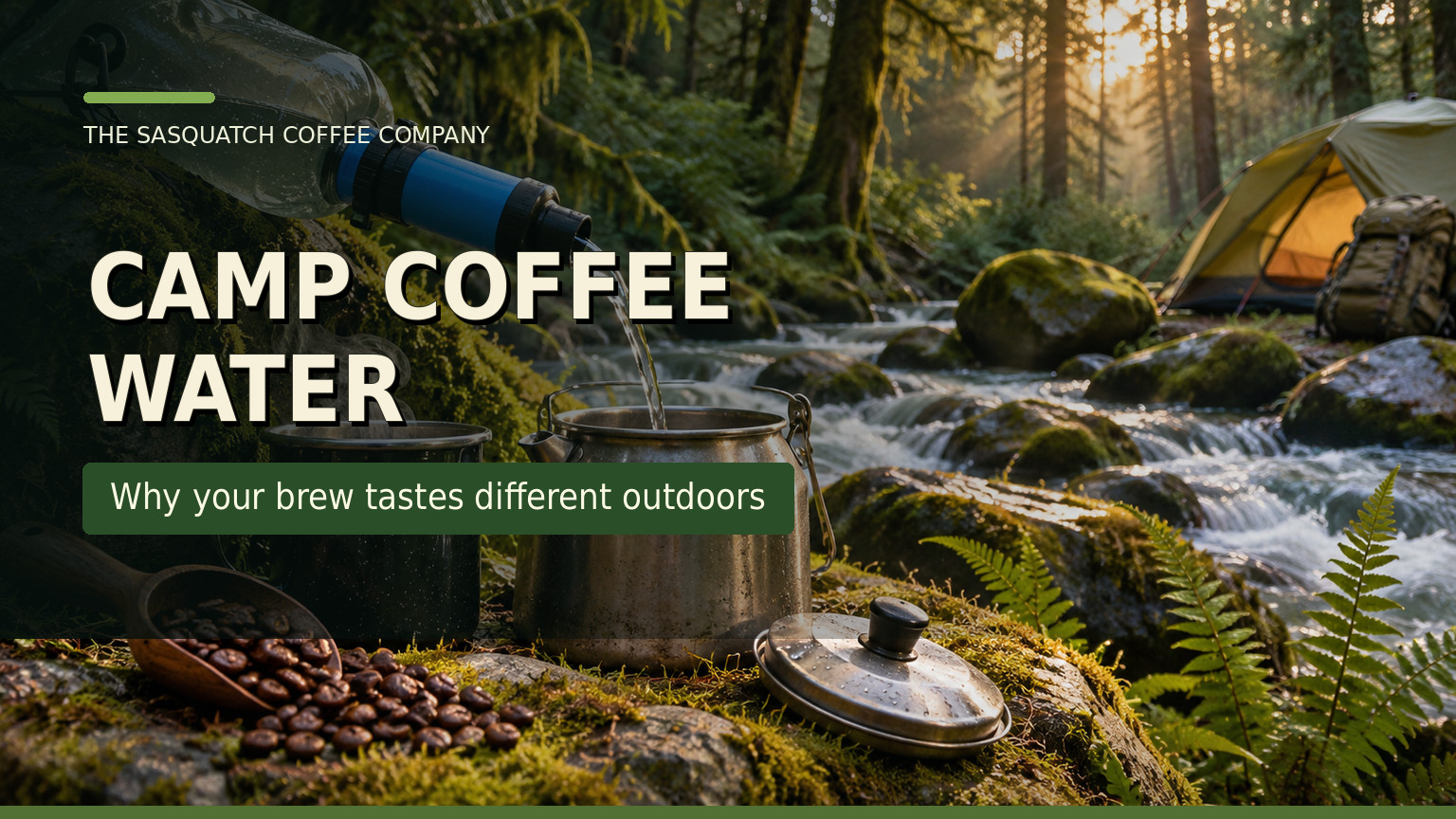
You pack your favorite Sasquatch Coffee, measure the same grounds you use at home and brew with your familiar camping gear. But the first sip tastes different. Why? One often-overlooked ingredient is the water. Its mineral content, smell and temperature can influence the result, and the way you handle it outdoors matters just as much.
Quick answer: Camp coffee water can change flavor because of its mineral composition and brewing conditions. Start with safe drinking water and a consistent recipe, then adjust one variable at a time instead of blaming the beans.
Why brewing water changes coffee flavor
Water is more than a neutral carrier. Dissolved minerals, chlorine-related tastes and other characteristics can affect the flavor you notice in brewed coffee. The Specialty Coffee Association’s discussion of water and extraction explores why the chemistry of the brewing water can influence a cup.
If coffee tastes excellent at home but unusually flat or sharp at a campsite, repeat the same dose, grind and brewing method while trying a different source of safe drinking water. That’s a more useful test than changing everything at once.
Use treated or reliably safe water—never assume a stream is safe
Clear mountain water may look inviting, but appearance alone does not confirm that it’s safe to drink. Germs can be present even when a stream looks pristine. The CDC’s backcountry water treatment guide advises treating water from lakes, rivers and streams before drinking or cooking with it. Boiling is an effective option; properly selected filtration followed by disinfection can also be appropriate.
Follow current public-health instructions and your equipment manufacturer’s directions rather than guessing treatment times. Water treatment intended to make a beverage safe should happen before considering subtle flavor adjustments. Coffee brewing itself should not be used as an excuse to skip safe-water practices.
What changes between home and camp brewing?
- Different water source: A campground tap or safely treated backcountry water may taste different from your home tap.
- Changing heat: Wind and ambient temperature can make it harder to keep brewing water at a steady temperature.
- Inconsistent measurements: Eyeballing grounds and water outdoors can change brew strength.
- Different equipment: A small camp kettle, percolator or travel dripper won’t behave exactly like your home machine.
- Grounds storage: Damp or stale coffee can make the water seem responsible when storage is the real issue.
Five steps to better camp coffee water
- Start with drinking water you know is safe or treat water appropriately before use.
- Clean your water bottle and kettle so old odors don’t enter the brew.
- Measure coffee and water; start around a 1:16 to 1:18 coffee-to-water ratio.
- Keep the kettle and brewer sheltered from wind while using your stove only where it can operate safely outdoors.
- Take a taste note and change only one thing at the next brew.
For an easy starting measurement, use our camping coffee ratio chart. For a deeper look at grind, see the camp coffee grind-size guide.
Should you bring bottled water for coffee?
For car camping, bringing potable water from home can make a comparison experiment easier and reduce uncertainty. On a longer backpacking trip, carrying all of your water may be impractical, so plan a reliable treatment method and follow the rules for your destination. Choose a solution that protects health and minimizes unnecessary waste.
Does boiling fix hard-water taste?
Boiling can address microbiological risks when done correctly, but it doesn’t make all unwanted tastes or dissolved substances disappear. Some mineral content remains. If a source has an unusual chemical odor, discoloration or a known contamination warning, don’t assume boiling makes it safe; use a reliable alternative source and check local advisories.
Try one roast, then test your water
Begin with a coffee you know well, such as Feelin’ Squatchy medium-dark roast. Brew it once at home and once at camp using similar equipment and measurements. The comparison can help you decide whether to adjust water, grind or pouring technique.
Camp coffee water FAQ
Can I make coffee with river water?
Only after making the water safe to drink using appropriate guidance and treatment. Do not rely on water clarity.
Does filtered water always make better coffee?
Not always. It depends on the starting water and the type of filter. A filter may improve some tastes while leaving others unchanged.
What’s the easiest way to improve campground coffee?
Use safe water, keep the water quantity consistent, protect the brew from wind and test changes one at a time.
Good camp coffee begins with a thoughtful setup. Bring safe water, your favorite Sasquatch Coffee and the curiosity to make each cup better.