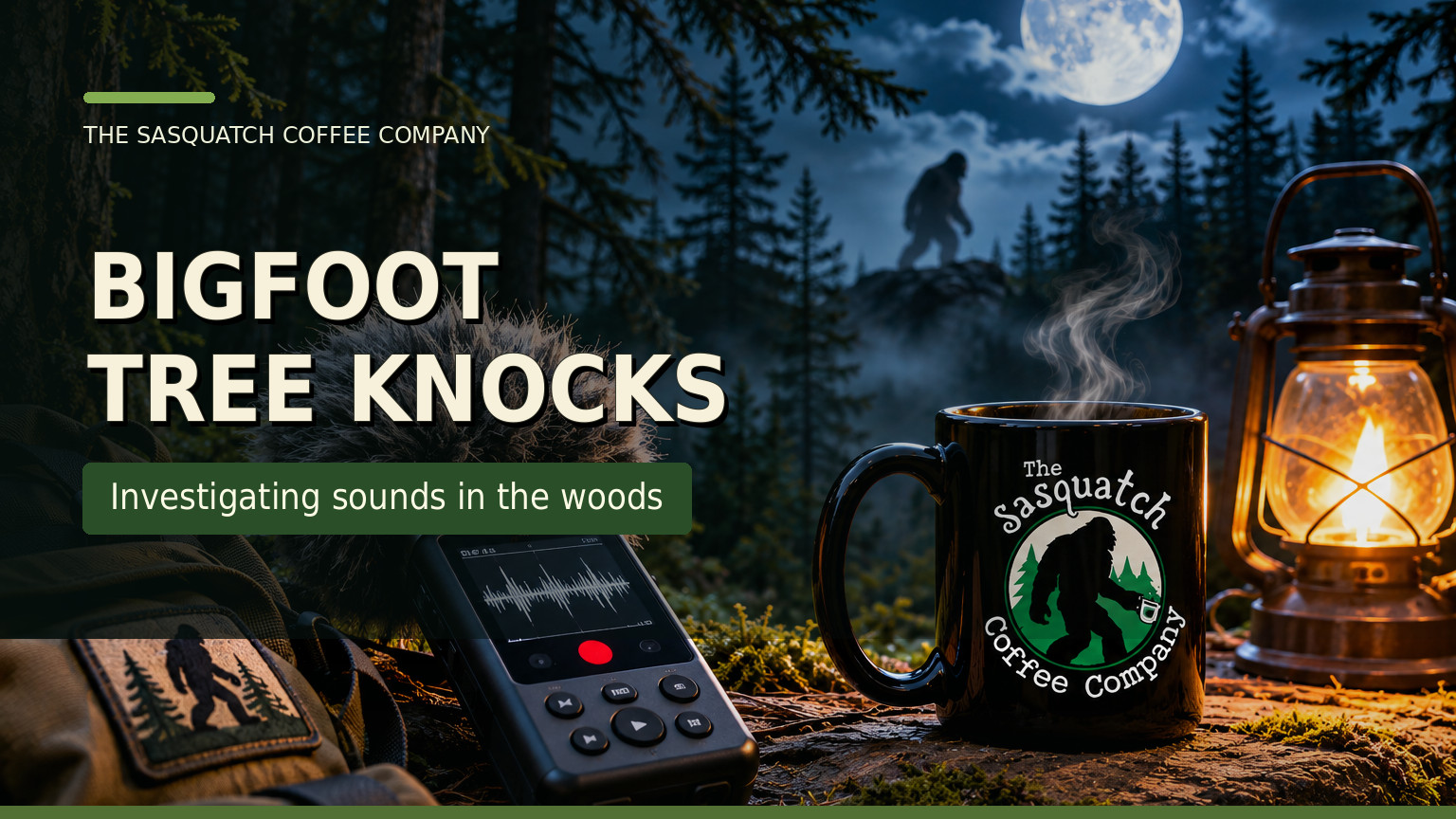
You’re standing on a forest trail when a sharp knock carries across the trees. A second sound answers—or seems to. Reports of “tree knocks” appear in Bigfoot discussions, often described as wood striking wood somewhere beyond the observer’s view. But forests are noisy places, and a mysterious sound is not the same thing as a known source.
What are Bigfoot tree knocks? The term refers to unexplained knocking sounds that some enthusiasts interpret as possible Sasquatch activity. That interpretation remains unproven. A more useful goal in the field is to record what occurred, determine what ordinary sources may explain it, and preserve information for independent review.
Why can a forest produce knocking sounds?
Standing and fallen trees can move against one another in wind. Branches can break or strike trunks. Human activity, distant tools, falling debris and wildlife may also create sharp sounds. Terrain and weather can affect how sound travels, making a distant source seem closer or creating the impression that several noises came from different directions.
If you hear a knock, don’t rush toward it or assume it is a response. Think of it first as an acoustic event that needs documenting.
Make a useful field record
- Record the exact time and approximate location. Note the clock used and whether its time is accurate.
- Write down the sequence. How many knocks? How much time between them? Were they isolated or repeated?
- Describe the sound in ordinary words. Sharp, hollow, muffled, metallic, resonant or distant are more useful than “definitely Bigfoot.”
- Log weather and wind. Tree motion may explain repeated impacts.
- Note other activity. Nearby roads, campsites, trails, logging operations and people may matter.
- Keep the original recording. Avoid replacing the untouched file with an enhanced or edited version.
For tips on capturing longer audio segments, read our nighttime forest audio guide.
How to test a suspected knock pattern
Begin with observation. If it’s safe and permitted to remain nearby, collect a longer recording that includes intervals before and after the unusual sounds. Listen for wind gusts, creaking or other noises that occur with the knocks. Note whether an apparent “answer” followed a random event or whether a similar timing pattern repeated.
You can review recordings with another person who has not been told which source to expect. Ask them to describe what they hear before showing your own interpretation. If you make an experimental knock yourself, note that clearly in the log; do not mix it with spontaneous events or assume any later sound is a response.
Repeated sounds are not automatically communication. Patterns can arise from wind, periodic human activity and coincidence. A short clip seldom contains enough context to establish a source.
Should you knock on trees to get a response?
Be cautious. Striking trees or broadcasting noises can disturb wildlife and other visitors, and damaging vegetation may violate land-management rules. Do not hit trees, break branches, use bait or intentionally provoke animals. On public lands, follow posted restrictions and local guidance; a quiet listening approach is often more responsible and more informative.
What to include when sharing a recording
- The original audio file and its duration.
- Date, approximate location and any important restrictions on sharing the location.
- Weather, wind and nearby human activity.
- A note explaining any edits, filters or changes in playback speed.
- The range of plausible explanations you’ve considered.
- Exactly what remains unidentified after review.
A social media clip with dramatic text can entertain, but it is not a substitute for source material. Be transparent about your uncertainty and avoid calling a sound definitive proof.
Stay safe in the woods
Don’t separate from your group or leave a trail to follow a sound after dark. Carry appropriate navigation, light and communication equipment for your terrain. Tell someone your plan. Leave wildlife undisturbed and protect sensitive habitat information if you publish notes.
Bigfoot tree knock FAQ
Are tree knocks proof of Sasquatch?
No. The source of a knock may be unknown, but that alone doesn’t establish Bigfoot as the cause.
How should I record a knock?
Start recording as soon as it is safe, capture as much environmental context as possible and preserve the original file.
What if the sound seems to answer me?
Write down the exact sequence and timing, including anything you did. Then consider ordinary causes and coincidence before inferring a response.
Good research begins with open curiosity and better records. Explore our witness interview guide for another fieldwork tool. And when it’s time for a break, enjoy a mug of Sasquatch Coffee without leaving a trace behind.