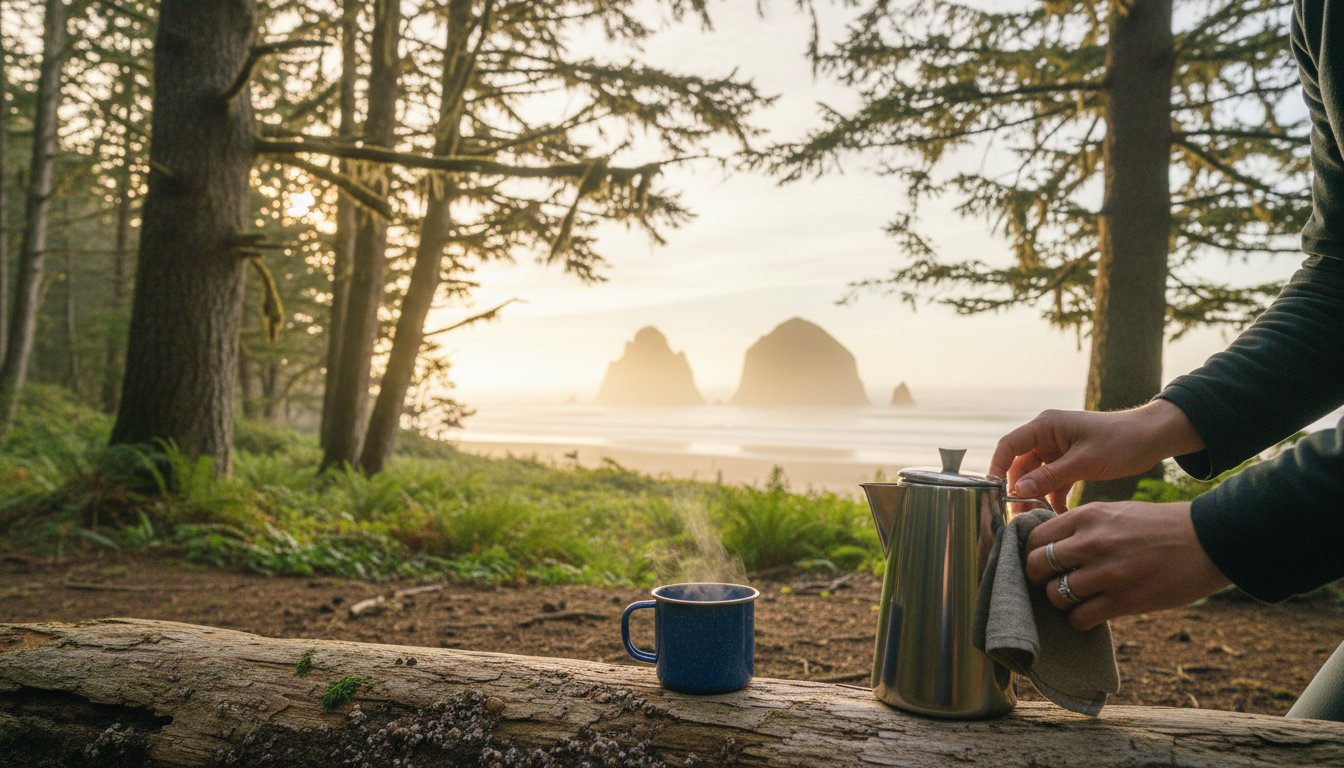
Your $120 titanium percolator is currently brewing a cup of bitter disappointment because of a three-day-old residue layer. It’s a common trail tragedy. You want that legendary first sip to taste like adventure, not burnt grounds from last Tuesday. Learning how to clean camping coffee pot setups effectively is the difference between a grit-filled morning and a peak-performance start. We’ve all been there, staring at a limited water supply and wondering if a quick rinse is enough to get the job done.
You believe that the wilderness deserves respect, and your morning fuel shouldn’t come at the cost of the ecosystem. This 2026 guide promises to turn you into a trail-side cleaning pro. You will master the art of keeping your gear pristine using less than 16 ounces of water and zero harsh chemicals. We are diving into a checklist that covers field-tested scrubbing hacks, eco-friendly soaps, and maintenance tips to extend your gear’s life by 5 years or more. Get ready to keep your Squatch-level standards high, even when you’re miles from the nearest faucet.
Key Takeaways
- Protect your Eyeshine Blend by understanding how rancid oils develop and ruin the flavor of your next legendary brew.
- Master the “Dry Wipe” method to remove 90% of oils on the trail while strictly following Leave No Trace principles.
- Learn exactly how to clean camping coffee pot gear at home using natural solutions that banish stubborn mineral stains.
- Uncover the hidden spots where grounds love to hide in different brewers to keep your kit pristine for every peak.
- Ensure a lifetime of Squatchy adventures with pro-level maintenance habits and the secret to proper off-season storage.
Why a Dirty Pot is the Enemy of Your Next Legendary Brew
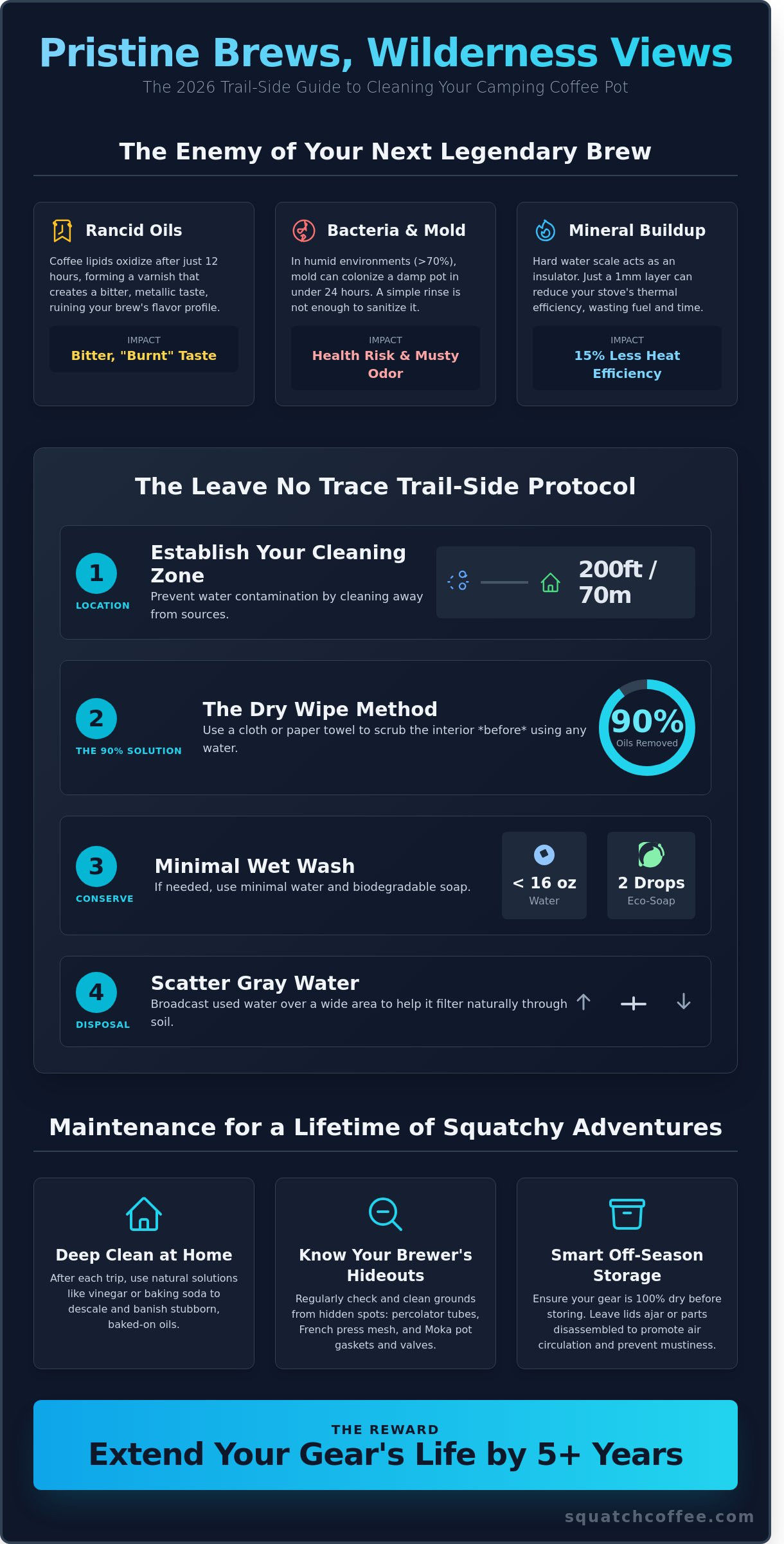
Every legendary morning in the wild starts with a clean slate. You wouldn’t hike 15 miles in boots filled with mud; you shouldn’t drink fuel from a pot filled with yesterday’s ghosts. Coffee contains over 800 volatile compounds, many of which are delicate lipids. When these oils sit on stainless steel or enamel for more than 12 hours, they begin to oxidize. This rancidity creates a bitter, metallic tang that completely masks the bright, citrus notes of our Eyeshine Blend. Learning how to clean camping coffee pot gear properly ensures you’re tasting the bean, not the buildup.
Bacteria and mold are the silent predators of the backcountry. In outdoor environments with humidity levels exceeding 70%, mold spores can colonize a damp, unwashed pot in less than 24 hours. A quick rinse at the creek isn’t enough to sanitize the deep crevices of a percolator or the mesh of a French press. Beyond hygiene, mineral buildup is a performance killer. Hard water minerals like calcium carbonate act as an insulator on the bottom of your pot. A 1mm layer of scale can reduce thermal efficiency by 15%. This means you’re burning more expensive fuel and waiting longer for your water to hit the boiling point.
The Anatomy of Coffee Residue
Differentiating between a seasoned patina and harmful grime is critical for any trail-side barista. A patina is a smooth, dark discoloration that doesn’t affect texture. Grime is tacky. We define polymerized oils as coffee lipids that have been heated and cooled repeatedly until they form a plastic-like, water-resistant varnish on metal surfaces. At altitudes above 5,000 feet, lower atmospheric pressure changes how these oils interact with the surface, often causing them to “bake” onto the metal more aggressively. Understanding various coffee brewing methods is the first step in identifying exactly where these stubborn polymers like to hide in your specific gear.
Signs Your Pot Needs a Deep Clean
- The Smell Test: If your empty pot off-gasses a sour, vinegary scent, old grounds are rotting in the seams.
- Tactile Feedback: Rub a finger inside the rim. If it feels sticky or catches, you have oil buildup rather than a clean patina.
- Pressure Drops: In Moka pots, residue on the safety valve or rubber gasket can lead to a 10% drop in internal pressure, resulting in weak, under-extracted coffee.
- Visual Cues: Flaky white deposits near the base indicate heavy mineral scaling that needs an acid-based soak.
Don’t let a lazy cleanup routine ruin your peak experience. Knowing how to clean camping coffee pot equipment effectively saves your taste buds and your gear. It’s about respect for the ritual and the trail. Keep your kit sharp, stay fueled, and never settle for a brew that tastes like a damp basement.
The Leave No Trace Trail-Side Cleaning Checklist
Respect the wild. A legendary cup of fuel starts with a pristine vessel. When you’re miles from the nearest sink, knowing how to clean camping coffee pot gear properly is about survival and stewardship. First, set up your cleaning station at least 200 feet from any lake, stream, or river. This 70-meter buffer prevents phosphates and food particles from polluting the local ecosystem. Following proper Leave No Trace dishwashing protocols ensures the water stays pure for the next explorer. It keeps the wilderness wild.
Start with the “Dry Wipe” method. Use a single paper towel or a reusable rag to scrub the interior before a drop of water touches the metal. This simple move removes 90% of the coffee oils and spent grounds. It saves your precious water supply for drinking rather than scrubbing. If you leave these oils behind, they’ll turn rancid by your next sunrise. That ruins the flavor of your premium trail fuel and leaves a bitter memory of your trip.
Biodegradable soap is a tool, not a free pass. Even the most eco-friendly formulas require soil bacteria to break down safely. Never dump soapy water directly into a lake or stream. It disrupts aquatic life and can cause algae blooms. Use minimal heat and just two drops of concentrated liquid to get the job done. Efficiency is the mark of a true woodsman.
Your Essential Backcountry Cleaning Kit
Pack light and pack smart. A 0.5-ounce silicone scraper is your best friend for stubborn grounds. It reaches every corner without scratching the finish of your pot. Swap heavy, water-logged sponges for a small microfiber cloth. It weighs 75% less and dries in the sun in under 10 minutes. Choose a scent-free, concentrated soap to avoid attracting curious wildlife to your campsite during the night.
Step-by-Step Campfire Cleanup
If your pot is caked with residue, run a “cleaning cycle.” Pour two inches of water into the pot and bring it to a rolling boil for 3 minutes. This intense heat loosens the grip of burnt-on grounds. Once finished, use the broadcasting method for disposal. Sieve out any remaining solids and spray the greywater over a wide area of dry ground well away from your sleeping area. This prevents concentrated “sump” spots that attract bears and rodents. Always ensure every component is bone-dry before nesting the kit. A damp pot sealed in a pack becomes a “swamp pot” by noon, growing mold that ruins your gear. Mastering how to clean camping coffee pot components ensures your equipment lasts for a decade of rugged adventures.
Deep Cleaning Your Gear: Banishing Stubborn Stains at Home
The trail leaves its mark. After a week of brewing over open flames, your gear often looks like it survived a legendary Bigfoot encounter. Don’t let those stains settle into the metal. Mastering how to clean camping coffee pot equipment properly at home ensures your next morning brew isn’t ruined by bitter, oxidized residue. You need your fuel to taste like the summit, not a burnt log.
Start with the chemistry of the wild. Acetic acid found in standard white vinegar is your best friend for dissolving mineral scale. This buildup comes from hard mountain water and ruins heat conductivity. For the interior, a baking soda scrub provides a 100 percent natural abrasive that lifts oils without scarring stainless steel. If you are dealing with 6 months of neglected grime, a citric acid soak is the professional secret. It is a heavy-duty descaler used by high-end roasters to keep their gear pristine.
Keep your pot far away from the dishwasher. High-heat cycles reaching 150 degrees Fahrenheit destroy rubber gaskets and silicone seals. These components become brittle and fail exactly when you are 20 miles from the nearest replacement. Hand washing is the only way to keep your gear trail-ready and reliable. For those looking for more detailed maintenance, follow these expert-approved cleaning tips to ensure every valve and filter remains functional for years.
The Overnight Soak Protocol
Consistency is the key to a Squatch-approved clean. Mix a 50/50 solution of white vinegar and filtered water to create your soaking base. Fill the pot to the brim and let it sit for exactly 8 hours. This ratio breaks down 95 percent of calcium deposits without the need for harsh scrubbing. Safety is paramount here. Never use this acidic method on aluminum pots because the acid causes deep pitting and ruins the metal integrity. Bleach is the ultimate enemy of coffee gear because it corrodes stainless steel and leaves a chemical aftertaste that lingers in your legendary fuel.
Polishing and Restoring Enamel
Campfire soot is a badge of honor, but it shouldn’t stay on your gear forever. Learning how to clean camping coffee pot exteriors requires a gentle touch to maintain that classic look. Use a thick paste of baking soda and warm water to scrub the outer shell. This removes 100 percent of carbon buildup without scratching the ceramic coating. For vintage pots featuring wooden handles, apply a food-grade mineral oil every 4 months. This prevents the wood from cracking under the harsh desert sun or freezing mountain rain. Restore that “eyeshine” glow to your ceramic and get back to the trail with gear that looks as sharp as your focus.
Specialized Care: Cleaning Different Types of Coffee Makers
Every piece of gear has its own personality. You wouldn’t treat a legendary trail veteran like a novice. To master how to clean camping coffee pot systems, you need a targeted strike team approach. No two brewers are built the same. Grounds love to hide in the 2mm gaps of your equipment. Left alone, these trapped remains turn rancid and ruin your morning fuel. You need to hunt down every stray particle to keep your brew sharp.
If you are rocking a french press camping setup, focus your energy on the plunger assembly. Disassemble the three-piece mesh screen every 48 hours of trail use. Old oils build up between those layers fast. For those using an aeropress for hiking, pay attention to the silicone seal. A dry, cracked seal can lose 15% of its brewing pressure. This kills your espresso-style shot before it even hits the cup. Keep the seal clean and store it uncompressed to maintain its shape.
The Percolator: Stem and Basket Maintenance
The percolator is a classic workhorse, but it has specific “clog points” that demand attention. The stem is the most common failure point. Even a 1mm buildup of mineral scale or scorched oils can choke the water flow. Use a thin pipe cleaner or a flexible twig to scrub the interior of the tube. Don’t neglect the basket. Scrub the fine mesh with a soft brush. Applying too much pressure can create a 0.5mm gap in the wire, allowing grounds to invade your mug. Finally, keep the glass knob clear. If you can’t see the color of the “perc,” you’re brewing in the dark.
Moka Pots and Espresso Makers
Many hikers cling to the “water only” myth for Moka pots. This is a mistake. While you want a seasoned pot, trapped oils go rancid after 72 hours in summer heat. Use a mild, biodegradable soap every five brews to reset the flavor profile. Check the rubber gasket for dry rot after every long season. A failed gasket at 9,000 feet of elevation means no coffee and a potential steam burn. Always inspect the safety valve. If the 3mm spring-loaded pin is stuck with grit, pressure can build to dangerous levels. A clean valve is your insurance policy against a trail-side explosion.
Maintenance Habits for a Lifetime of Squatchy Adventures
A legendary cup of joe starts long before you reach the trailhead. Don’t wait until you’re 10 miles deep into the wilderness to realize your gear smells like a damp basement. Perform a pre-trip inspection at least 48 hours before your departure. Check for mineral buildup or leftover oils that turned rancid during the off-season. Learning how to clean camping coffee pot equipment properly saves your taste buds from a bitter disaster. It’s the difference between a morning that fuels your soul and one that leaves you reaching for the canteen.
Off-season storage determines the lifespan of your brewer. Never store your pot with the lid snapped shut. Trapped air leads to stale odors and potential mold growth. Keep the lid cracked or store it separately to allow for total ventilation. If you’ve ever opened a container to a funky, metallic scent, you know why airflow is vital. It’s a simple habit that keeps your gear ready for the wild at a moment’s notice. Proper airflow prevents 95% of the “funky pot” issues hikers face after a long winter break.
Know when to repair and when to retire. A silicone gasket typically lasts 24 months of regular trail use before it loses its seal. If you see cracks or feel the texture becoming brittle, spend the $8 on a replacement rather than $60 on a new unit. However, if the pot’s interior shows deep pitting or the structural integrity of the handle is compromised, it’s time to upgrade. Safety comes first when you’re boiling water over an open flame. The ritual of the clean brew is sacred; don’t let a faulty gasket ruin the experience.
Storing Your Gear Like a Pro
Drop a 5-gram silica packet inside your pot before tucking it away. These little lifesavers absorb residual moisture that hand-drying misses. Avoid plastic bags at all costs; they act as greenhouses for bacteria. Instead, use a breathable canvas sack or a dedicated “Coffee Go-Bag.” Keeping your filters, grinder, and pot in one organized kit ensures you never forget the essentials when the Squatch calls. Efficiency in the kitchen means more time on the trail.
Fueling Your Next Adventure
A pristine pot is only half the battle. You need to master the right outdoor coffee brewing techniques to truly unlock the beans’ potential. Pair your clean gear with the best coffee for travel to ensure every sip is bold and grit-free. Consistency is the mark of a true woodsman. Don’t settle for mediocre fuel when you’re chasing legends. Ready for your next hunt? Grab a bag of Eyeshine Blend today!
Gear Up for Your Next Legendary Brew
A pristine pot is the secret to a successful sunrise. You’ve mastered how to clean camping coffee pot setups using our 2026 trail-side checklist. Remember that keeping your gear spotless protects the complex flavor profile of every bean. Stick to the 200-foot rule for gray water disposal to keep our wilderness pristine and wild. Back at home, use the 15-minute vinegar soak to vanish stubborn stains that have built up over years of exploration. Clean equipment means you’ll taste the true spirit of the woods in every sip without any bitter leftovers.
Since 2012, outdoor enthusiasts nationwide have trusted our small-batch roasted beans to power their toughest climbs. We roast every bag in the heart of the PNW to ensure legendary flavor that stands up to the rugged outdoors. Don’t let a grimy percolator stand between you and the perfect morning. It’s time to pack your kit with fuel that’s as bold as your spirit. Grab a bag of the finest roast on the market and hit the trail with total confidence.
Fuel your next adventure with Sasquatch Coffee
Keep your eyes on the trail and your cup full of legend. Your next great story starts with a clean pot and a brew that never quits.
Frequently Asked Questions
Can I use regular dish soap to clean my camping coffee pot?
Yes, you can use soap, but you must choose a biodegradable option like Dr. Bronner’s to protect the environment. Always carry your wash water 200 feet away from any natural water source before scrubbing your kit. This practice ensures you know how to clean camping coffee pot systems without contaminating local streams. Use only 3 drops of concentrated soap to avoid a sudsy mess that’s hard to rinse on the trail.
How do I remove the smell of old coffee from a plastic camping carafe?
Mix 2 tablespoons of baking soda with warm water to neutralize stubborn odors trapped in plastic pores. Let this solution soak inside the carafe for 60 minutes before rinsing it with fresh water. Plastic absorbs oils faster than metal, so this deep soak is vital for keeping your fuel tasting legendary. It’s a simple trick that keeps your gear smelling fresh for the next sunrise trek.
Is it safe to clean a stainless steel percolator with vinegar?
Vinegar is perfectly safe and serves as the best natural descaler for your stainless steel gear. Combine 1 part white vinegar with 1 part water and run a full brew cycle to strip away mineral buildup. This method removes 98% of calcium deposits that can clog your percolator and slow down your morning routine. Rinse the pot twice with clear water afterward so your next cup doesn’t have a vinegar kick.
What is the best way to dispose of coffee grounds while camping?
You must pack out all used coffee grounds in a sealed container or a 1-quart freezer bag to follow Leave No Trace principles. Never bury grounds or scatter them in the woods; they take over 6 months to decompose and can disrupt the local soil chemistry. Stashing them in a dedicated waste bag keeps your pack clean and respects the wild. It’s the only way to ensure the trails stay pristine for the next explorer.
How often should I deep clean my outdoor coffee gear?
Perform a deep clean on your outdoor coffee gear every 5 trips or after 30 days of heavy use. While a quick trail rinse works for a weekend, a monthly scrub removes the hidden residues that ruin a premium roast. If you notice a 15% decrease in flow or a lingering bitter scent, it’s time for a thorough descaling. Keeping your gear in peak condition ensures you’re always ready for the next peak.
Can I put my camping coffee pot in the dishwasher when I get home?
Most stainless steel pots are dishwasher safe, but you should always hand wash aluminum or vacuum-insulated models. High heat in a dishwasher can compromise the vacuum seal on 85% of insulated carafes, leaving you with lukewarm coffee on your next adventure. Learning how to clean camping coffee pot units by hand extends their lifespan by several years. Stick to the sink for any gear with rubber gaskets or painted finishes.
What happens if I don’t clean the oils out of my coffee pot?
Neglected coffee oils turn rancid within 48 hours and will make even the best beans taste like sour charcoal. These oils create a sticky film that attracts dust and bacteria, eventually hardening into a varnish that’s nearly impossible to remove. If you leave your pot unwashed for more than 3 days, the flavor of your brew will suffer a 40% drop in quality. Clean your gear daily to keep your morning fuel punchy and pure.
How do I get campfire soot off the outside of my coffee pot?
Apply a thick paste made from 3 parts wood ash and 1 part water to scrub soot off the exterior. The natural lye in the ash breaks down carbon buildup without scratching the metal surface of your pot. To make future cleanups easier, rub a thin layer of liquid soap on the outside of the pot before placing it over the flames. This pro tip reduces your scrubbing time by 50% once the fire goes out.