Most explorers think a charred, oily bean is the only way to survive a 4 AM start, but they’re dead wrong. That greasy shine on your grocery store coffee is actually a signal that the flavor and energy have already escaped. If you want a real kick for your next summit, you need the raw, unbridled power of light roast coffee beans. These beans can retain up to 15% more caffeine than dark roasts because they spend less time under the fire, keeping the natural fuel intact.
You want a brew that tastes like a mountain sunrise, not a handful of dirt. It’s frustrating when you’re hit with confusing labels about notes of bergamot or hay when all you want is a bright, balanced cup. We’ll show you how to choose the best beans for a high-octane brew that powers your boldest adventures. This guide breaks down the science of the light roast, decodes the jargon, and reveals how to find the freshest beans online so your morning routine remains legendary.
Key Takeaways
- Bust the caffeine myth and discover why light roasts provide the high-octane energy boost needed for your early morning expeditions.
- Explore the vibrant flavor profiles of citrus and floral notes that define a truly legendary, bright brew.
- Learn how to choose the best light roast coffee beans by decoding processing methods and origin stories.
- Master critical brewing techniques like water temperature and grind size to extract every drop of flavor for the wild.
- Get an inside look at our signature Eyeshine Blend, designed to be the ultimate fuel for your next great adventure.
What Are Light Roast Coffee Beans? The High-Octane Truth
Finding the perfect bean is like tracking a Sasquatch through the deep timber. You need to know exactly what to look for before the trail goes cold. If you want the true spirit of the wilderness in your mug, you need light roast coffee beans. These beans are the raw, unadulterated fuel of the coffee world. We pull them from the heat the moment they reach their peak potential. They don’t hide behind a mask of smoke. They’re light brown, matte, and bone-dry to the touch. You won’t see any surface oils here. That oil stays inside the bean, preserving the volatile aromatics that define a legendary brew.
Choosing a light roast means you’re tasting the mountain itself. You’re tasting the 1,500-meter elevation and the mineral-rich volcanic soil of the tropics. Understanding the coffee roasting process is essential for any explorer who takes their caffeine seriously. While dark roasts focus on the flavor of the fire, light roasts highlight the “origin character.” It’s the difference between a clear view from the summit and a foggy valley floor. You get the authentic profile of the bean, not the char of the roaster.
The Science of the First Crack
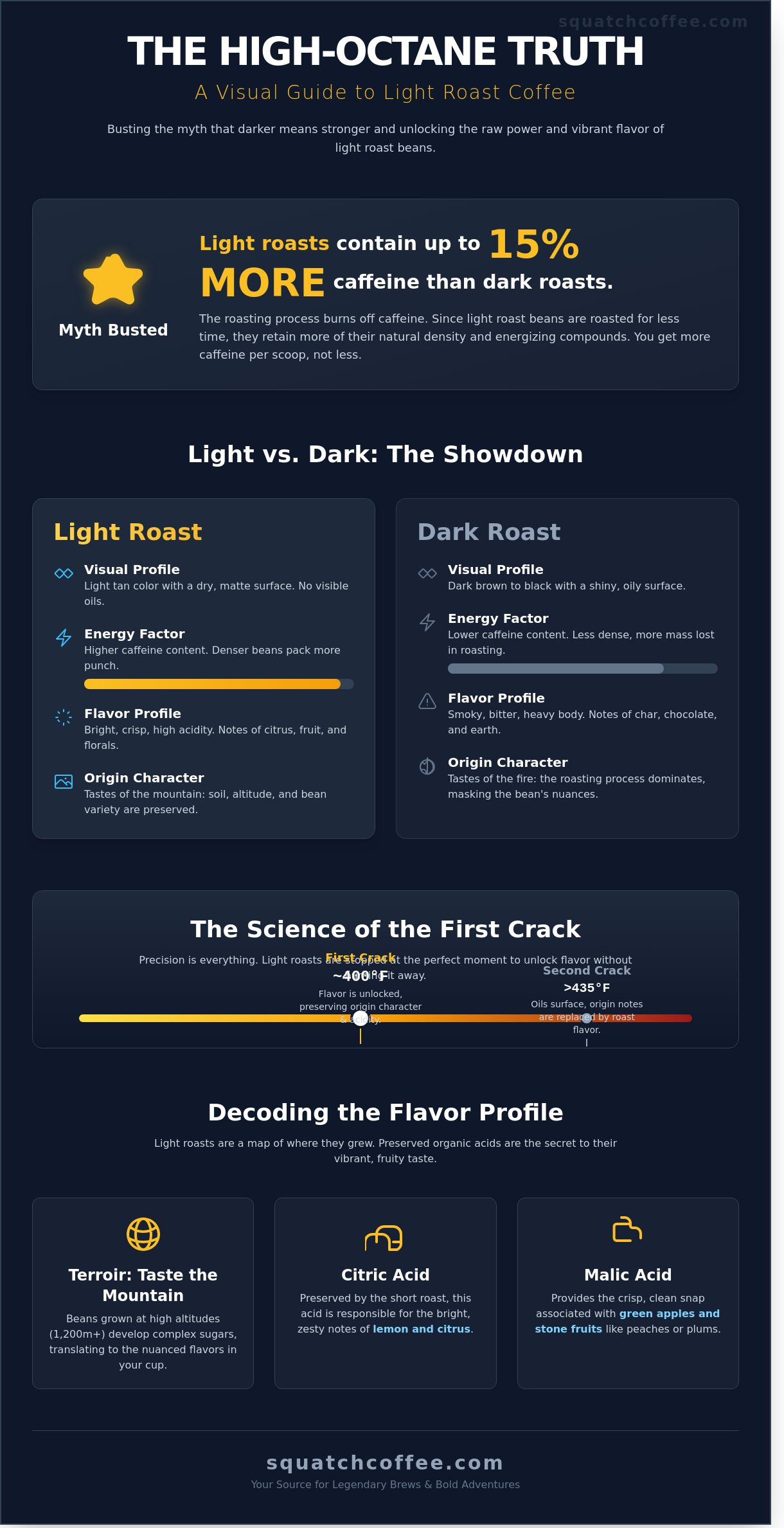
Precision is everything on the trail and in the drum. When internal bean temperatures climb between 380°F and 400°F, the magic happens. The bean physically expands and the cellular structure breaks, creating an audible pop that roasters listen for like a signal flare. This is the first crack. Stopping the roast at this 400°F mark prevents the Maillard reaction from crossing the line into carbonization. First crack is the precise moment coffee flavor is unlocked but not masked.
Light Roast vs. Dark Roast: The Energy Factor
There’s a common myth that dark roasts pack more punch because they taste “stronger.” It’s a total lie. Light roast coffee beans are actually denser and retain more of their natural alkaloids. When you roast longer, the bean loses mass and moisture. A light roast keeps its integrity and its caffeine. It’s the ideal morning fuel for a 12-mile trek through the heavy brush. You get a sharp, clean energy boost without the heavy, bitter aftertaste of a dark roast.
- Visual Profile: Light tan color with a zero-oil, matte finish.
- Flavor Notes: High acidity, crisp citrus, and complex floral aromas.
- Density: Heavier beans that provide more caffeine per scoop than oily dark roasts.
- The Goal: Preserving the unique chemical compounds of the specific coffee variety.
Don’t settle for burnt beans that taste like a campfire leftover. Real explorers want the brightness and the snap of a roast that respects the bean’s journey from the soil to the cup. It’s bold, it’s szilaj, and it’s ready to power your next big adventure.
Decoding the Flavor Profile: From Fruity to Floral
Light roast coffee beans aren’t just a caffeine source; they’re a map of the wild landscape where they grew. When you take that first sip, you’re tasting the soil, the rain, and the high-altitude air. This roast level preserves the bean’s original identity. Darker roasts taste like the fire, but light roasts taste like the wilderness. It’s the difference between a charred log and a fresh pine needle.
Acidity is the heartbeat of a great light roast. Coffee pros call it “brightness.” It’s that crisp sensation on the sides of your tongue, similar to a tart green apple or a fresh lemon. This isn’t the bitter bite people fear. It’s a clean, vibrant energy that wakes up your palate. Because the beans spend less time in the roaster, they retain their natural density. This results in a lighter body. It feels more like tea than heavy syrup. Research from the University of Wyoming highlights how the characteristics of different roast levels define the final cup, noting that lighter roasts maintain higher acidity and more complex flavor notes than their darker counterparts. This lack of oil on the bean surface ensures a clean finish. You won’t find a heavy, smoky aftertaste lingering for hours. Instead, the flavor vanishes like a shadow in the woods, leaving you ready for the next sip.
Why Light Roast Coffee Tastes Like Fruit
The secret lies in chemistry. Roasting at lower temperatures, typically ending between 350 and 400 degrees Fahrenheit, preserves organic acids. Citric acid brings citrus notes. Malic acid provides that stone fruit snap. Beans grown at altitudes exceeding 1,200 meters develop sugars slowly, leading to a denser bean. This is “terroir.” It’s the literal taste of the mountain. Whether it’s the punch of wild blueberries or the zest of a lemon, these flavors are inherent to the bean’s DNA. You’re drinking the 1,500-meter peak in every cup.
The Complexity of the Aroma
The experience starts before the water hits the grounds. Fragrance is the smell of dry coffee; aroma is the scent of the brew. Light roasts offer a forest in bloom. You’ll find jasmine, hibiscus, and even toasted grain. Smelling the grounds is a vital step for any trail-ready brewer. It preps your brain for the 800 aromatic compounds hidden inside. Sasquatch fans hunt for that “Eyeshine” in a cup. They want a profile as sharp and mysterious as a midnight trek through the pines. If you’re ready to find your own path, explore our legendary blends to start your next adventure.
A Buyers Guide: How to Choose Your Legendary Beans
Selecting the right fuel for your morning is like checking your map before a deep woods trek. You need the right light roast coffee beans to power your climb. Start by looking at the altitude. Beans grown above 1,500 meters develop more density because they grow slower in thinner air. This 20% increase in density allows the bean to retain complex sugars and bright acids during the pörkölés process. High-altitude seeds are tougher and pack more punch than lowland crops.
Processing also dictates your flavor profile. Washed beans go through a depulper and water tanks to remove the fruit. This results in a clean, crisp cup that highlights the bean’s inherent character. Natural processing leaves the coffee cherry intact while drying in the sun. This method produces “funky” flavors, often resembling fermented berries or tropical fruit. If you want a predictable, sharp morning, go washed. If you want a wild, unpredictable adventure, go natural.
Freshness is your most critical metric. Never buy a bag without a clear roast date. Your peak flavor window hits between 7 and 21 days after the beans leave the roaster. This 14 day sweet spot ensures the CO2 has escaped while the volatile aromatics remain trapped inside. Referencing the National Coffee Association’s guide to roasts helps you identify these lighter profiles by their light brown color and lack of surface oil. If the beans look greasy, they’ve been pushed too far for a true light roast experience.
Single-Origin: The Purest Expression of the Bean
Single-origin beans come from one specific farm or region. Ethiopia and Kenya remain the gold standard for this category. Kenyan beans often yield a savory, tomato-like acidity, while Ethiopian Yirgacheffe offers a tea-like delicacy with jasmine notes. Central American crops from high-altitude regions in Guatemala provide a balance of green apple brightness and a cocoa finish. Choose single-origin when you want to explore the specific “terroir” of a single hillside. It’s a solo expedition for your palate.
Light Roast Blends: Consistency for the Trail
Blends are your reliable compass. Roasters combine light roast coffee beans from two or three different regions to create a flavor profile that stays consistent year-round. While a single-origin might change flavor as the harvest ages, a blend is engineered for stability. These are often better for the campfire or when using a percolator. A rugged, Squatchy blend provides enough body to stand up to a splash of milk or a rough morning in the wilderness. It’s the dependable fuel you need for the long haul.
Brewing Light Roast for the Wild: Best Methods
Taming light roast coffee beans requires more than a lukewarm campfire. These beans are dense; they’ve spent less time in the roaster, which means their cellular structure remains tight and stubborn. To unlock the citrus and floral notes hidden inside, you need heat and surface area. Crank your water temperature to 205°F. While dark roasts turn bitter at high heat, light roasts thrive in the fire. Grind your beans slightly finer than you would for a standard medium roast. This increases the surface area, allowing the water to pull out complex sugars before you hit the trail.
The Aeropress remains the ultimate indestructible companion for the wilderness. Its pressure-based extraction forces flavor out of the densest beans, making it a favorite for those who value pack space and durability. It’s the multi-tool of coffee gear, built to survive a drop down a granite slope while still delivering a clean cup.
Mastering the Outdoor Pour-Over
The pour-over is the gold standard for clarity on the mountain. Pack a collapsible silicone dripper, a 0.1g digital scale, and a small gooseneck kettle. Start with the “bloom” phase. Pour 40g of water over your grounds and wait 30 seconds. Watch the bubbles; that’s CO2 escaping. If you skip this, the gas blocks the water, leaving you with a sour, thin brew. Aim for a total brew time of 3 minutes. Keep your pour steady and circular to ensure every grain of your light roast coffee beans is fully saturated.
The Immersion Method: Light Roast in a French Press
Most hikers think the French Press is only for dark, muddy brews. They’re wrong. You can get a stellar cup using immersion if you adjust your clock. Give it a full 5 minutes of steep time; that’s 60 seconds longer than the standard 4-minute wait. This extra minute compensates for the bean’s density. Use a high-quality burr grinder to ensure a consistent coarse-medium texture. Fines will clog your filter and ruin the clarity. To keep the profile sharp and floral, pour the finished brew through a paper filter after pressing. It removes the silt and lets the acidity shine.
Ready to fuel your next summit with high-octane flavor? Grab a bag of our legendary light roast and taste the wild in every sip.
Experience the Legend: Sasquatch Light Roast Selections
We don’t believe in scorched, oily beans that taste like a forest fire. Our roasting philosophy centers on the power of the small batch. This isn’t just a business choice; it’s a commitment to the craft of the trail. By roasting in batches of 50 pounds or less, we maintain absolute control over the heat profile. We treat every roast like a survival kit: it has to be perfect, or it doesn’t leave the shop.
Meet the Eyeshine Blend. It’s our signature bright fuel designed for those who need to see through the morning mist. If you want light roast coffee beans that pack a punch without the heavy bitterness, this is your gear. It features vibrant citrus notes and a crisp finish that wakes you up faster than a cold dip in a mountain lake. It’s the ultimate companion for early starts and long hauls.
Freshness isn’t a suggestion at Squatch Coffee. It’s a guarantee. We ship our beans within 48 hours of roasting. You won’t find bags here that have gathered dust for six months on a supermarket shelf. To keep your supply steady, join the Sasquatch Coffee Club. It’s the best way to secure recurring wilderness fuel delivered straight to your door. You choose the frequency, and we make sure you never run out of light roast coffee beans before your next trek.
Why Small-Batch Roasting Matters
Quality control is the heart of our operation. Our roasters listen for the exact moment of the “first crack” to pull the beans from the drum. This precision preserves the delicate sugars and organic acids that industrial roasters burn away in massive 10,000-pound silos. You’re supporting an artisanal roaster that loves the outdoors as much as you do. We roast for the people who actually get their boots dirty.
Gearing Up for Your Next Expedition
Your brew deserves better than a flimsy paper cup. Pair your favorite roast with our Sasquatch Coffee Ceramic Mug. It’s built heavy and tough for basecamp or the kitchen table. If you know a Bigfoot enthusiast who needs better mornings, our gift sets provide the perfect kit. Stop settling for mediocre caffeine that leaves you sluggish. Fuel your next adventure with our light roast beans!
Fuel Your Next Great Escape
You’ve mapped out the route; now it’s time to pack the high-octane fuel that powers the journey. Choosing light roast coffee beans means you’re prioritizing the 15% higher caffeine retention that darker roasts often lose during the heating process. These beans preserve the complex, floral acidity found at high altitudes, giving you a flavor profile that’s as vibrant as a mountain sunrise. We roast every single bag in small batches of 20 pounds or less to guarantee the peak freshness your palate deserves. It’s the reason over 5,000 outdoor enthusiasts trust our beans to keep them moving through the toughest terrain. You don’t need a heavy, bitter brew weighing you down when you’re chasing legends. You need a clean, bright energy source that lasts until the final mile. Stop drinking stale, mass-produced charcoal and start fueling your spirit with something legendary. The woods are deep and the trails are long, so make sure your cup is up to the challenge.
Shop Legendary Light Roast Beans
Believe in the power of a better brew and keep your eyes on the horizon.
Frequently Asked Questions
Does light roast coffee have more caffeine than dark roast?
Light roast coffee beans contain more caffeine than dark roast when measured by volume because they are much denser. A standard 12 ounce cup of light roast provides roughly 15 percent more caffeine than the same volume of a darker roast. This extra fuel keeps you moving through the toughest terrain. Since beans lose mass during longer roasting cycles, you get less kick per scoop with dark blends. Stick to light roasts for that legendary energy boost before a dawn hike.
Is light roast coffee more acidic than dark roast?
Light roast coffee is significantly more acidic than dark roast because the shorter roasting time preserves the organic acids. You will typically find a pH level around 4.7 in these bright brews, whereas dark roasts often land closer to 5.2 or higher. This acidity isn’t a flaw; it’s the vibrant soul of the bean that provides a crisp, citrusy finish. It acts as a wake up call for your senses when you’re out in the wild.
How long do light roast coffee beans stay fresh?
Your light roast coffee beans stay at peak freshness for exactly 28 days after the roast date marked on the bag. After 4 weeks, the volatile oils oxidize and the legendary flavor profile begins to flatten into something dull. Store your beans in a vacuum-sealed canister at 68 degrees Fahrenheit to protect your fuel from the elements. Oxygen is the enemy of adventure, so keep that seal tight until you’re ready to grind and brew.
What is the best way to brew light roast coffee?
The pour-over method is the best way to extract the complex, hidden flavors found in light roast coffee beans. Use water heated to exactly 205 degrees Fahrenheit to pull out the delicate floral and fruity notes without scorching the grounds. A 1 to 16 coffee-to-water ratio ensures a balanced cup that isn’t too thin or watery. This precision allows every note of the wild to shine through, making it the ultimate method for the discerning explorer.
Can I use light roast coffee for espresso?
You can certainly use light roast beans for espresso, though it requires a very precise grind and high heat. Modern baristas often pull “modern espresso” shots using light roasts to highlight unique origin flavors rather than simple bitterness. Set your grinder to a finer setting than you’d use for dark roasts to avoid a thin, watery body in the cup. Aim for a 30 second extraction time to hit the sweet spot of flavor and intensity.
Why does my light roast coffee taste sour?
Your coffee tastes sour because of under-extraction, which happens when the water hasn’t pulled enough flavor from the dense grounds. Light beans are stubborn and hard, so they need more heat and contact time to release their secrets. Increase your water temperature to 208 degrees Fahrenheit or grind your beans finer to fix the issue immediately. A sour cup is just a sign you haven’t mastered the trail yet, so adjust your gear and try again.
Should I buy whole bean or ground light roast coffee?
Always buy whole bean coffee to preserve the integrity and power of your daily fuel. Ground coffee loses 60 percent of its aromatic compounds within 15 minutes of exposure to the air, leaving you with a stale experience. Grinding right before you brew ensures you capture every legendary note of the wild forest. Invest in a quality burr grinder for a consistent particle size, which is the only way to guarantee a cup as fresh as a mountain morning.
Is light roast coffee better for your stomach?
Light roast coffee can be tougher on sensitive stomachs because it contains higher levels of chlorogenic acid than darker roasts. Research indicates that dark roasts produce a specific compound called N-methylpyridinium that actually helps reduce stomach acid production by 40 percent. If you have a sensitive gut but crave the high-octane flavor of a light roast, try the cold brew method. This reduces overall acidity by 60 percent while keeping the caffeine levels high for your next big adventure.