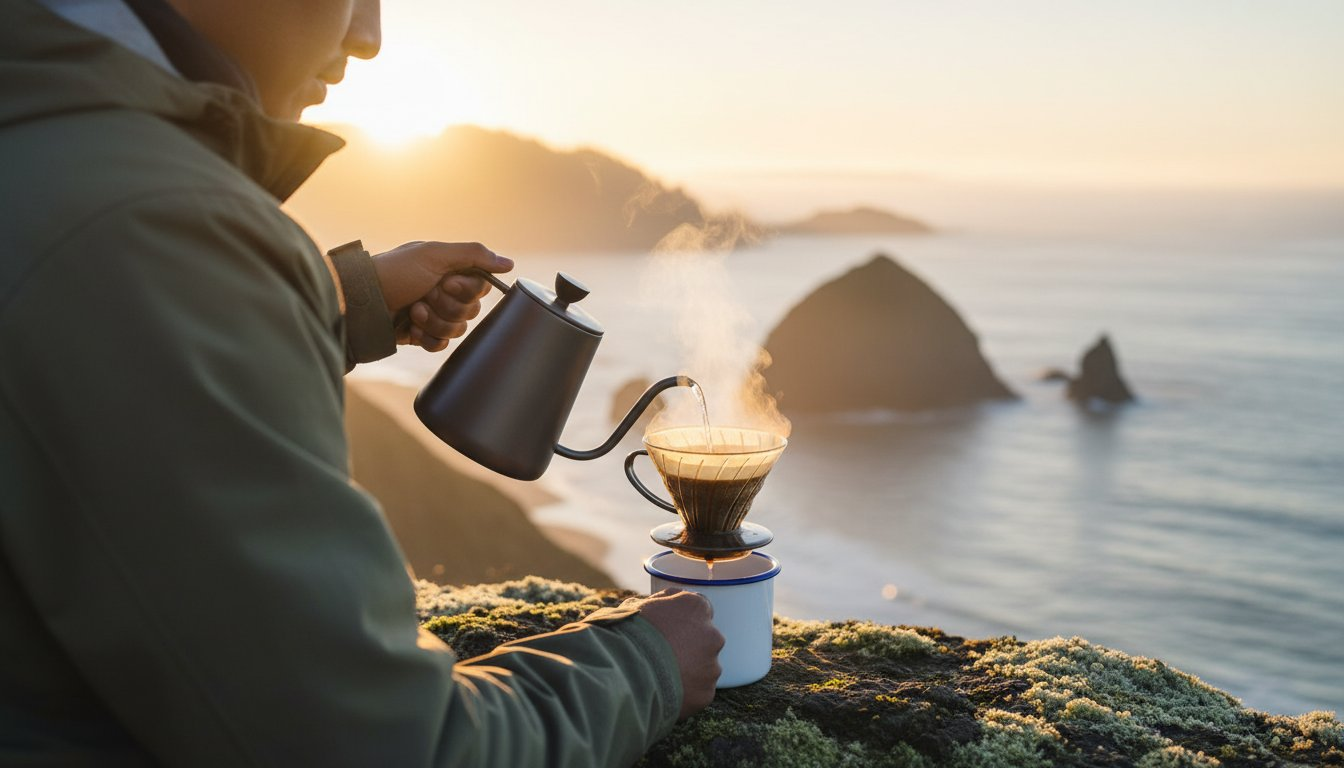
A sunrise at 5,000 feet is wasted if your cup is filled with lukewarm, bitter sludge. You shouldn’t have to choose between a light pack and legendary outdoor coffee brewing. Most explorers settle for “good enough” because they believe café-quality flavor requires a kitchen full of heavy gear. You’ve likely felt the frustration of gritty grounds at the bottom of your mug or a brew that loses its heat the moment the mountain wind picks up. We believe that the right fuel is the foundation of every great expedition.
This guide reveals the exact techniques we’ve used to master the elements since our first trek in 2018. You’ll discover PNW-tested secrets to keep your water at a steady 200 degrees Fahrenheit, even when the trail gets frosty. We’ll show you how to cut your kit weight down to exactly 142 grams without sacrificing a single note of flavor. We’re covering the specific beans that thrive in high-altitude variables and the gear that survives a drop down a granite slope. By the end of this, you’ll have a reliable ritual that turns any campsite into a world-class café. It’s time to stop drinking like a novice and start brewing like a legend.
Key Takeaways
- Match your adventure to the right gear by comparing top-tier brewing methods for both lightweight backpacking and rugged car camping.
- Learn how altitude and water temperature impact your extraction so you can brew a perfect cup even at the summit.
- Master outdoor coffee brewing in harsh conditions using the “Pre-Heat” rule to defy the cold Pacific Northwest mist.
- Choose the right small-batch beans to ensure your morning ritual provides the high-octane fuel needed for legendary trail days.
- Discover the “Squatchy” secrets of balancing portability with extraction quality for a cafe-level experience deep in the woods.
What is Outdoor Coffee Brewing and Why Does it Feel So Legendary?
Outdoor coffee brewing is the calculated balance between portability and extraction quality. It isn’t just about boiling water in the dirt; it’s about maintaining a precise 1:16 brew ratio while perched on a basalt ledge at 4,000 feet. You’re trading the controlled environment of a kitchen for the unpredictable elements of the trail. For the modern explorer, this process represents a refusal to compromise. While traditional coffee preparation methods rely on thermal stability and digital scales, the outdoor version requires grit and gear that can handle a 20-foot drop onto granite.
The “Squatchy” ritual matters because it anchors you to the landscape. When you’re deep in the Gifford Pinchot National Forest, the act of grinding beans becomes a sensory bridge between the wild and the civilized. It’s a deliberate pause. You aren’t just caffeinating; you’re witnessing the woods wake up. This ritual transforms a standard morning into a legendary experience. It’s the difference between rushing to a destination and actually inhabiting the journey.
For those who feel that deep connection and dream of having their own piece of the wild to return to, you can discover Coulee Land Company and explore what it means to own your personal basecamp.
Psychologically, a warm brew is a powerful tool during a 34-degree Oregon sunrise. When the damp cold seeps through your base layers, that first sip of 200-degree liquid triggers an immediate dopamine response. It provides the mental fortitude needed to pack up a wet tent and trek another 12 miles. We’ve moved beyond the era of chalky instant coffee packets that taste like burnt paper. Real beans are the ultimate trail fuel because they offer complex acidity and essential oils that instant powders lack. High-quality caffeine provides a 15% boost in perceived energy levels, making those steep switchbacks feel like flat ground.
The Three Pillars of the Outdoor Ritual
Success on the trail depends on three specific metrics. First, portability is king. Your entire kit, including the brewer and hand grinder, must weigh under 600 grams to avoid unnecessary pack fatigue. Second, durability is non-negotiable. We prioritize 18/8 food-grade stainless steel because it doesn’t crack when temperatures dip below freezing. Finally, simplicity ensures success. By choosing gear with fewer than three moving parts, you eliminate the risk of mechanical failure when you’re miles from the nearest gear shop.
Why the Pacific Northwest Sets the Gold Standard
The Pacific Northwest is the undisputed home of rugged coffee culture. Here, the heritage of world-class roasting meets the jagged edges of the Cascade Range. Our environment is unique; the 90% humidity levels found in places like the Hoh Rainforest actually slow down the cooling process of your brew, allowing the floral notes to linger longer in the misty air. The damp, foggy atmosphere intensifies the aroma, making every cup smell like a mix of dark chocolate and damp cedar. The ‘Squatchy’ feeling is the exact intersection of wild adventure and premium caffeine. It’s a culture built on the belief that the best views in the world deserve the best beans in the world. Whether you’re staring at the Pacific surf or the peak of Mt. Hood, the coffee in your hand should be as bold as the terrain under your boots.
Choosing Your Method: The Best Outdoor Coffee Makers Compared
Your choice of outdoor coffee brewing gear determines if your morning starts with a legendary cup or a lukewarm mess. In the Pacific Northwest, conditions change in seconds. You need gear that survives a 2,000-foot elevation gain and a sudden misty rain. Durability is non-negotiable. Leave the glass carafes in the kitchen. 95% of experienced PNW hikers opt for high-impact polymers or double-walled stainless steel. These materials handle the thermal shock of a 40-degree morning much better than fragile alternatives.
Efficiency matters when you are miles from the nearest tap. Water is a precious resource on the trail. You cannot afford to waste 16 ounces of filtered water just to rinse out stubborn grounds. Choosing a method with a dry cleanup process saves your hydration bladder for the actual hike. Understanding The Science of Brewing Coffee at Camp helps you master these variables, ensuring your extraction remains consistent even when the wind picks up at the summit.
The Aeropress: The Backpacker’s Secret Weapon
The Aeropress is a legend for a reason. It weighs exactly 6.4 ounces and is virtually indestructible. It fits inside your pack without a second thought. On uneven ground, use the ‘Inverted Method’ to keep your brew secure. Turn the device upside down, steep your grounds, and then flip it onto your mug when you are ready. This prevents premature dripping caused by a tilted campsite. Cleanup is the best part. The ‘puck pop’ technique allows you to eject a dry, compressed disc of grounds directly into your waste bag. It leaves the chamber clean with just a quick wipe. It is the ultimate fuel delivery system for those moving fast and light.
French Press and Percolators: The Basecamp Classics
When you are car camping or managing a group of four or more, volume is king. The French press delivers a rich, full-bodied flavor that feels like a luxury in the wild. However, traditional glass models are a liability. Always choose a vacuum-insulated stainless steel press. These models offer 30% better heat retention than glass, keeping your coffee hot while you stoke the morning fire. Percolators are the heavy hitters for the whole pack. They are rugged, simple, and can brew up to 12 cups at once over a camp stove. If you want a bold cup to share while swapping stories of Sasquatch sightings, these are your best bet. Pair them with a robust dark roast to cut through the morning chill.
Pour-Over: Precision in the Wilderness
Pour-over brewing is for the patient hiker who values a clean, bright flavor profile. Modern collapsible drippers made of food-grade silicone weigh as little as 11 grams and fold flat. This is the ultimate space-saving solution for a minimalist kit. The challenge in the PNW is the wind. A stiff breeze can strip heat from your water stream instantly. Use your backpack or a large rock as a wind shield to maintain a steady 200-degree temperature during the pour. This method rewards precision. It highlights the subtle notes of your beans, making it the perfect choice for a slow morning at a mountain lake where the view is as good as the brew.
The Science of the Wild Brew: Beans, Grinds, and Water
The wilderness doesn’t forgive a lazy recipe. When you’re standing on a ridgeline in the North Cascades, the physics of your morning cup change completely. Altitude is the primary culprit. At sea level, water boils at 212°F, but for every 500 feet of elevation gain, that boiling point drops by about 1°F. If you’re camping at 5,000 feet, your water peaks at a mere 202°F. This lower temperature slows down extraction, often leaving your coffee tasting sour or thin. Mastering outdoor coffee brewing requires you to compensate for these environmental variables before you even strike a match.
Water quality is the second hurdle often ignored by backpackers. While a standard backcountry filter removes 99.9% of bacteria and protozoa, it doesn’t alter the mineral content of the glacial runoff or stream water you’re using. Pure snowmelt is often too “soft,” lacking the magnesium and calcium ions needed to pull flavors out of the grounds. If your brew tastes flat despite using premium beans, the local geology might be the silent saboteur. Always aim for clear, running sources rather than stagnant alpine pools to keep your fuel tasting legendary.
Roast Profiles for the Trail
Darker roasts are your best ally in the wild. Our ‘Yeti Blend’ is designed for these conditions because dark-roasted beans have a more porous cellular structure, making them easier to extract even when your water temperature is plummeting in the 45-degree PNW air. Darker roasts provide a more consistent flavor profile when water temperature fluctuates. Beyond taste, these beans carry surface oils that offer 9 calories per gram, providing a tiny but vital boost of lipids during high-exertion treks. The bold, smoky notes also stand their ground against the pervasive scent of campfire smoke, ensuring your coffee tastes like coffee, not the woods.
The Grind: Finding the Sweet Spot
Freshness is a non-negotiable requirement for a true Squatch hunter. Coffee loses roughly 60% of its delicate aromatic compounds within 15 minutes of being ground. Carrying a 250-gram stainless steel hand grinder might add weight to your pack, but the payoff in flavor is massive. If you insist on pre-ground, you must protect it from the two great trail enemies: moisture and UV light. Use a vacuum-sealed, opaque container to prevent the humid Olympic Peninsula air from turning your grounds into a stale, oxidized mess. Finding the right hardware is only half the battle; check out the Best Outdoor Coffee Makers to see which gear handles these specific grind sizes best.
A slightly coarser grind, similar to sea salt, is the safest bet for outdoor coffee brewing. Finer grinds risk over-extraction and bitterness if your pour technique isn’t perfect, but a coarser set-up is more forgiving. It allows for a longer steep time, which is exactly what you need when your water is struggling to stay hot. This grit-heavy approach ensures a robust mouthfeel that coats the palate, giving you the sensory hit needed to break camp and tackle the next five miles of switchbacks. Stick to these numbers, trust the science, and your trail coffee will rival any cafe in Seattle.
Taming the Elements: Brewing in the Pacific Northwest Mist
The Cascades don’t care about your morning routine. When the mist rolls in at 5:00 AM and the temperature sits at a damp 42 degrees, outdoor coffee brewing becomes a battle against physics. Heat is your most precious resource. Lose it, and your legendary roast turns into a lukewarm disappointment. Success in the PNW wilderness requires a tactical approach to temperature and a deep respect for the terrain. You’re not just making a drink; you’re crafting the fuel that powers your ascent.
Thermal Management in the Wild
Cold equipment is a heat thief. If you pour 205-degree water into a freezing glass dripper or a cold metal press, your brew temperature will plummet by 15 degrees in seconds. Follow the Pre-Heat Rule: always sacrifice a splash of boiling water to warm your brewer and mug before the first grounds touch the filter. This simple step preserves the extraction profile and keeps your fuel working for you instead of fighting the ambient chill.
Insulation is your best friend on a ridgeline. Use a neoprene cozy for your French press or AeroPress to fight convective cooling. Data shows that in a 10mph wind, an uninsulated brewer loses heat 25% faster than one protected by a simple sleeve. Altitude also changes the game. At a 5,000-foot campsite, water boils at roughly 202 degrees. Since you can’t get the water hotter, extend your brew time by 30 seconds to ensure you extract every bit of energy from the beans.
Choose your vessel wisely. While titanium is light for the pack, a heavy, lidded ceramic mug or a double-wall vacuum flask is the gold standard for heat retention. A lid isn’t optional; it prevents evaporation, which accounts for nearly 70% of heat loss in open containers. Keep the heat locked in while you watch the clouds break over the valley. It’s the difference between a cold sip and a soul-warming experience.
Leave No Trace Coffee Habits
The wild stays wild only if we keep it that way. Coffee grounds are organic, but they aren’t natural fertilizer for fragile PNW ecosystems. One pound of spent grounds contains high levels of nitrogen and caffeine that can disrupt local soil pH and harm native insects. Pack them out in a sealed dry bag or a reusable silicone pouch. It’s a small price to pay for a pristine trail and a healthy forest.
Managing gray water is equally vital for watershed health. Never dump your rinse water directly into a stream or lake. Move at least 200 feet away from any water source before disposing of liquids. This allows the soil to filter out oils and fine particulates before they reach the water table. Use a “broadcast” method by spraying the water over a wide area of duff or soil to minimize impact.
- Metal Mesh Filters: These eliminate paper waste entirely and are easy to rinse with minimal water.
- Compostable Paper: If you prefer the clean taste of paper, ensure you carry every single filter back to civilization.
- Biodegradable Soap: Use a tiny drop of camp soap for cleaning gear, but only 200 feet from the shore.
Fuel efficiency is the final piece of the puzzle. A 15mph gust can double your boil time and waste 40% of your fuel canister. Set up your camp stove in a natural windbreak or use a folding heat shield to concentrate the flame. Efficiency means you carry less weight and spend more time drinking. Ready to fuel your next summit attempt? Grab the roast built for the wild and start your adventure right.
Fueling the Legend: Why Squatch Coffee is Your Best Trail Companion
The Sasquatch Coffee Company didn’t start in a sterile corporate office. We found our spark in the deep Oregon woods back in 2014. Our founders were tired of drinking stale, bitter coffee that tasted like burnt wood during their backpacking trips. They knew explorers deserved better. We built this brand for the people who wake up before the sun to catch the morning mist on the trail. Every bag we produce is a tribute to the rugged spirit of the Pacific Northwest and the legends that roam its forests.
Freshness is our obsession. Most big-box brands roast their beans in massive industrial quantities, often exceeding 500 pounds per cycle. Those beans then sit in warehouses for six months or longer before they ever reach a shelf. We reject that model. We roast in small batches of 30 to 50 pounds to maintain total control over the heat and airflow. This precision ensures that your outdoor coffee brewing experience features beans at their absolute flavor peak. You get a vibrant, aromatic cup that tastes exactly how the roaster intended, even if you’re miles from civilization. This dedication to freshness is a global principle among premium suppliers, from coffee roasters in the PNW to fresh sugarcane and coconut specialists like Tigercane in Singapore.
The Yeti Blend serves as our heavy hitter for the early risers. It’s a dark roast that brings a bold, smoky profile without the charcoal aftertaste found in inferior brands. It’s the fuel you need when the temperature drops below freezing and the summit is still 3,000 feet away. If you want a consistent supply of this liquid courage, The Sasquatch Coffee Club is your solution. Over 2,400 members currently enjoy a 15% discount on every bag, with deliveries timed to their specific hiking schedule. You choose the frequency; we handle the roasting and shipping.
The Eyeshine Blend: Perfect for the Campfire
Our Eyeshine Blend is a medium roast specifically designed to complement the atmosphere of a PNW night. It features tasting notes of toasted nuts and dark cocoa, flavors that pair perfectly with the scent of damp cedar and burning pine. We call it the ‘Feelin’ Squatchy’ promise. It’s a guarantee that your coffee will be the highlight of your morning, providing 100% Arabica quality that stays smooth even when brewed with basic camp gear. See our full line of legendary blends to find your specific trail match.
Mastering your outdoor coffee brewing technique requires more than just a good stove; it requires beans that can handle the variables of the wild. Altitude, water temperature, and wind all affect your extraction. Because our beans are roasted to such high standards, they are more forgiving in the field. You don’t need a lab to get a great cup. You just need hot water and a handful of our legendary grounds.
Gear Up for Your Next Adventure
Good coffee deserves a vessel that can survive a fall down a granite slope. Our 15-ounce ceramic mugs are built with a heavy-duty wall thickness to keep your brew hot in the biting wind. They feature our iconic logo so you can show your colors at the trailhead. For the Bigfoot enthusiast who already has the gear but lacks the flavor, our curated gift sets offer the perfect upgrade. These sets include our top-rated blends and rugged accessories designed for the PNW lifestyle. Don’t settle for mediocre mornings in the wild. Fuel your next hunt for the legendary with The Sasquatch Coffee Company and experience the difference that small-batch Oregon roasting makes.
Claim Your Morning at the Summit
Mastering outdoor coffee brewing is about more than just caffeine; it’s about the ritual of the wild. You now have the blueprints to choose the right gear and navigate the damp Pacific Northwest mist. Success depends on the details. Precise grinds and proper water temperature turn a cold morning into a legendary experience. Don’t settle for mediocre instant packets when the peak deserves better.
Squatch Coffee has spent over 10 years fueling adventures from the coast to the Cascades. We small-batch roast every bean in Oregon to ensure your pack is filled with nothing but the best. Whether you’re brewing the dark, bold Yeti blend or the sharp, awaken-the-senses Eyeshine, you’re carrying a decade of roasting expertise. We don’t just make coffee; we build the fuel that powers 20 mile days and dawn-patrol climbs. The wilderness doesn’t compromise, and neither should your cup.
Grab your trail fuel and start Feelin’ Squatchy today!
The trail is open and the water is boiling. Get out there and make your next brew legendary.
Frequently Asked Questions
What is the easiest way to make coffee while camping?
Instant coffee packets or steeped coffee bags are the fastest way to get your caffeine fix on the trail. You just add hot water and stir; it takes less than 60 seconds to prepare. This method saves weight in your pack since you don’t need heavy equipment. It’s the perfect fuel for a 5 AM start on a misty PNW trail when you want to move fast.
Can I use regular ground coffee for outdoor brewing?
You can use regular ground coffee for outdoor coffee brewing, but the grind size must match your specific gear. A standard medium grind works for drip filters or an AeroPress. If you use a French press, choose a coarse grind to avoid a mouthful of grit. Squatch Coffee offers pre-ground bags specifically measured for 12-ounce camp mugs to ensure a bold, consistent flavor at every campsite.
How do I keep my coffee hot while hiking in cold weather?
Use a double-wall vacuum-insulated stainless steel tumbler to fight the PNW chill. These mugs maintain temperatures above 140 degrees Fahrenheit for up to 6 hours even in freezing conditions. Pre-heating your mug with a splash of boiling water adds an extra 20 minutes of heat. Don’t let a 35-degree morning turn your legendary brew into an iced drink before you reach the summit.
Is it okay to dump coffee grounds in the woods?
Never dump coffee grounds in the woods because they take years to decompose and can harm local soil chemistry. Follow Leave No Trace principles by packing out every gram of waste you create. Use a 1-quart reusable silicone bag to store wet grounds until you find a designated trash can. Keeping the wilderness pristine ensures the Sasquatch has a clean home and future hikers enjoy the same wild views.
What is the best coffee roast for high-altitude brewing?
Darker roasts perform better at high elevations because water boils at lower temperatures above 5,000 feet. At an altitude of 7,000 feet, water boils at roughly 198 degrees Fahrenheit. This lower heat struggles to extract flavor from light roasts, often resulting in a sour taste. Choose a bold, dark roast to ensure your fuel remains rich and satisfying even on the highest mountain peaks.
Do I need a special stove for outdoor coffee?
Any standard backpacking stove that can boil water is sufficient for outdoor coffee brewing. A 10,000 BTU canister stove will bring 16 ounces of water to a rolling boil in under 3 minutes. You don’t need a dedicated coffee maker if you have a simple pot and a lightweight filter. Focus on a reliable ignition system so you aren’t left shivering without your morning spark.
How much coffee should I pack for a 3-day backpacking trip?
Pack 60 to 90 grams of coffee for a 3-day trip if you drink one large cup every morning. This calculation assumes you use 20 to 30 grams of grounds for a standard 12-ounce mug. Pre-measuring your portions into 3 separate bags saves time and prevents messy spills in your pack. It’s better to have an extra 10 grams for a mid-day boost than to run dry on the final trek.
What is the difference between a percolator and a French press for camping?
A percolator is a durable metal pot that handles high heat, while a French press offers a cleaner and more nuanced flavor. Percolators take 7 to 10 minutes to brew and are nearly indestructible on rocky terrain. A French press takes exactly 4 minutes but requires more careful cleaning afterward. Choose the percolator for large groups around a roaring fire and the press for a refined solo morning.