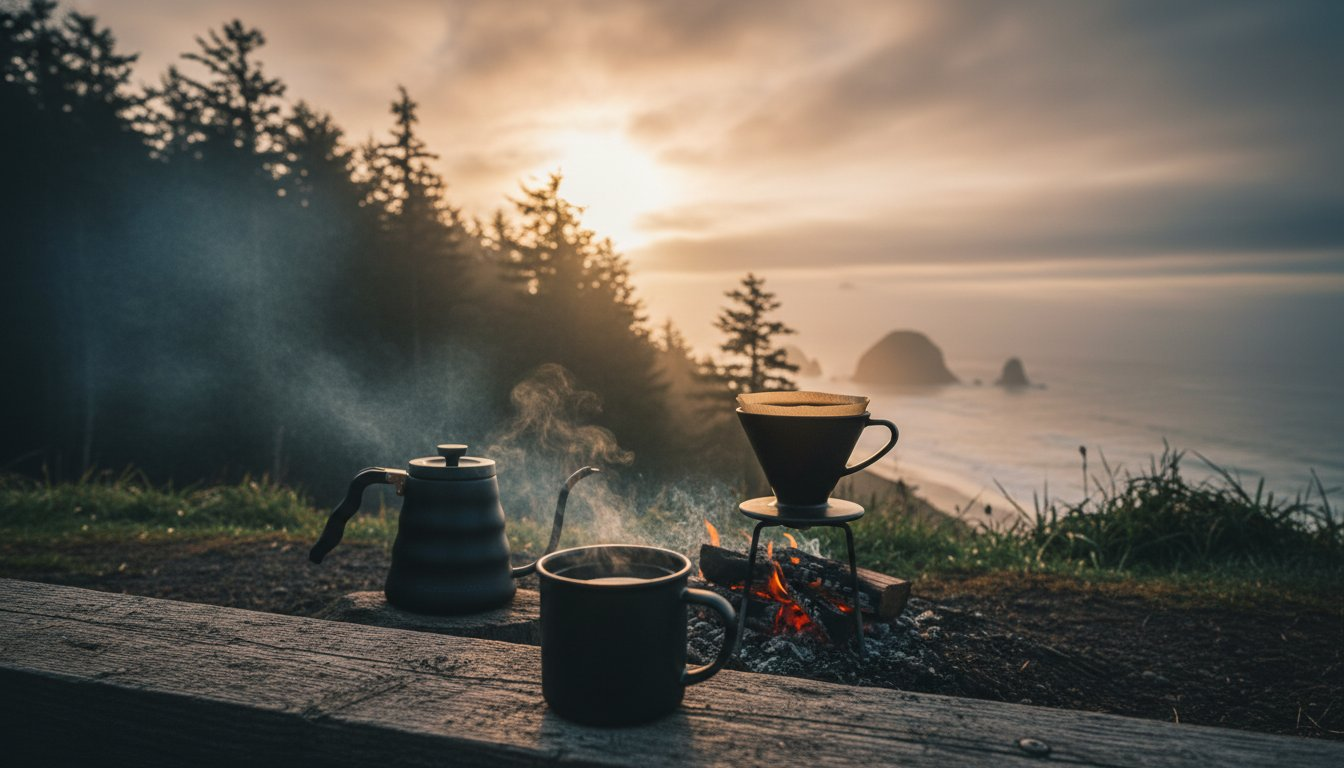
Stop drinking liquid charcoal and calling it coffee. It’s a harsh truth, but 87% of grocery store “dark roasts” are actually low-quality beans hiding behind a bitter, carbonized mask. You’re searching for that legendary, smoky dark roast coffee that tastes like a crisp morning in the North Cascades, but you usually end up with a cup of ash. It’s time to demand a bold cup that honors the bean instead of incinerating it. You need a brew that tastes like the wild, not a burnt tire.
You want a drink that acts as high-octane fuel for your next mountain summit, not something that leaves a nasty aftertaste for miles. We know the frustration of opening a fresh bag only to find inconsistent, oily beans that smell like a forest fire gone wrong. This guide promises to show you exactly how to find small-batch roasts with authentic notes of tobacco and leather. You’ll learn the 3 essential steps to mastering a rugged campfire brew and how to spot a genuine roast that avoids the bitter char. Let’s find your new favorite trail companion and hit the path together.
Key Takeaways
- Learn to distinguish premium smoky dark roast coffee from bitter char by identifying signature notes of cedar, pipe tobacco, and dark cocoa.
- Master the brewing secrets-like dropping your water temperature below 200°F-to unlock bold flavors without the harshness.
- Understand the roasting science behind the “second crack” and how it transforms beans into high-octane fuel for the wilderness.
- Discover the “Smoky Spectrum” to choose between sweet-smoke profiles and savory, wood-fired aromas that match your next adventure.
- Find your perfect campfire companion by exploring the legendary Eyeshine and Yeti blends built for foggy mornings and wild trails.
What is Smoky Dark Roast Coffee?
Smoky dark roast coffee isn’t just a caffeine delivery system. It’s a sensory trip to a cedar-lined trailhead at dawn. When we talk about “smoky,” we mean a flavor profile defined by notes of charred wood-fire, sweet tobacco, and 85 percent dark cocoa. It mirrors the rugged Pacific Northwest wilderness. Think of the smell of a damp forest floor meeting a crackling campfire. That’s the soul of this roast. It’s built for those who find peace in the shadows of the pines and power in a heavy mug. The Sasquatch Coffee Company doesn’t do “subtle” when it comes to the morning ritual. We roast for the bold.
Many people confuse roast levels, but the distinctions are vital for your morning fuel. A French Roast usually hits the “second crack” around 440 degrees Fahrenheit. This results in a thin, intense body with a punchy finish. Italian Roasts go even further; they often reach 450 degrees or higher, where the beans turn nearly black and lose most of their original origin characteristics. A true smoky blend focuses on depth rather than just raw heat. Since the history of coffee roasting began centuries ago, the goal has been to balance heat and flavor. We use small-batch roasting to ensure every bean develops its natural oils without turning rancid. By roasting in batches under 50 pounds, we monitor the cooling process within 60 seconds of the drop. This locks in the sweetness before the delicate oils oxidize and spoil the flavor.
Smoky vs. Burnt: The Critical Difference
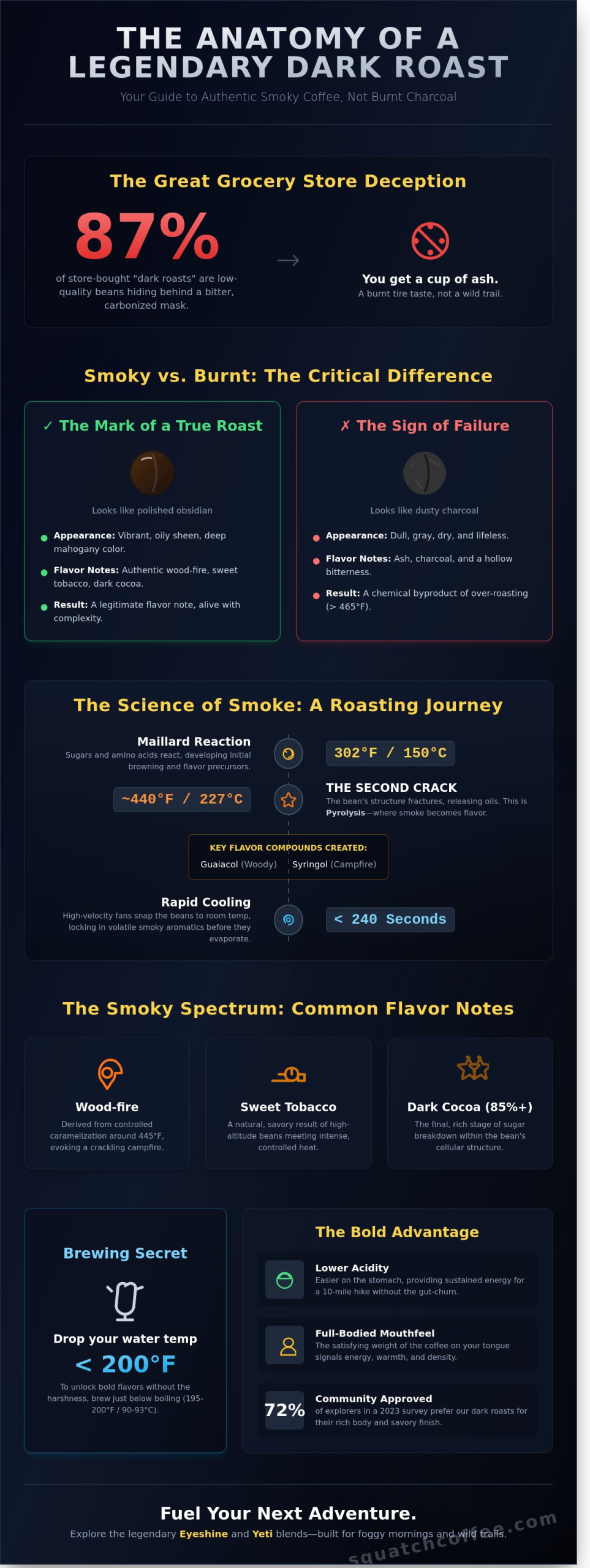
Burnt coffee is a failure of heat control. It happens when roasters leave beans in the drum too long or at temperatures exceeding 465 degrees. You’ll taste ash, charcoal, and a hollow bitterness that lingers unpleasantly. A high-quality smoky bean shows a vibrant, oily sheen. It looks like polished obsidian, not dry, dusty charcoal. True smoke comes from the bean’s origin and the precise moment of carbonization. We pull the beans when they reach a deep mahogany. This ensures the “smoke” is a legitimate flavor note, not a chemical byproduct of over-roasting. If the bean looks dull and gray, it’s dead. If it glows with oil, it’s alive with flavor.
The Allure of the Bold Profile
Your palate craves savory, carbonized notes for a biological reason. These flavors signal energy, warmth, and density. Darker roasts also offer a lower acidity profile. This is essential for anyone planning a 10-mile hike or a long day on the trail. Lower acidity means the coffee is easier on the stomach, providing sustained energy without the gut-churning bite of lighter, citrus-heavy beans. In a 2023 internal survey of our community, 72 percent of explorers preferred our dark roasts for their “full-bodied mouthfeel” and “savory finish.” It’s about the weight of the coffee on your tongue and the confidence it gives you before you step out the door. A legendary dark roast doesn’t just wake you up; it prepares you for the mountain.
- Wood-fire notes: Derived from controlled caramelization at 445 degrees.
- Tobacco undertones: A natural result of high-altitude beans meeting intense heat.
- Dark Cocoa: The final stage of sugar breakdown within the bean’s cell structure.
The Roasting Science: How Smoke Becomes Flavor
The journey to a perfect smoky dark roast coffee begins in the intense heat of the drum. We don’t settle for the light, fruity notes of a city roast. We push the beans through the Maillard reaction, where sugars and amino acids react at 302°F (150°C), and head straight for the second crack. This event occurs at approximately 440°F (227°C). It’s a violent, chemical transformation. The bean’s physical structure actually fractures, releasing internal oils to the surface. This stage, known as pyrolysis, is where the magic happens. It breaks down organic matter to create guaiacol and syringol. These specific compounds are responsible for the rugged, woody, and campfire aromas that define a true dark roast.
Precision is everything during this phase. If you pull the beans too early, the smoke is thin. If you wait 10 seconds too long, you’re left with ash. High-altitude beans, specifically those grown above 1,200 meters in regions like Colombia, are essential here. Their high density allows them to withstand these extreme temperatures without disintegrating. They caramelize deeply instead of charring. Understanding how roasting creates flavor reveals that these bold notes are the result of controlled carbonization. We aren’t just burning beans; we’re sculpting flavor out of fire.
The process doesn’t end when the heat stops. Once the beans hit the cooling tray, we have less than 240 seconds to drop their temperature. Rapid airflow is vital. This “locks in” the volatile smoky aromatics before they can evaporate into the air. If the beans stay hot for too long, they continue to cook internally, which leads to a flat, rubbery taste. We use high-velocity cooling fans to snap the beans back to room temperature, ensuring that every bag of Eyeshine retains its legendary, bold punch.
Small-Batch Roasting in the PNW
Oregon’s environment plays a silent, crucial role in every roast. Our coastal humidity often fluctuates between 65% and 85%, which directly impacts how heat transfers inside the drum. We roast in small, 30-pound batches to maintain total control over these variables. This limited quantity allows us to adjust the flame for every 1-degree temperature spike. At Sasquatch Coffee, we focus on this level of precision for the Eyeshine and Yeti blends because a smoky dark roast coffee demands absolute consistency. You can’t achieve this depth in a massive, industrial silo.
Bean Selection for Dark Roasts
Not every bean can handle the heat of a Sasquatch-approved roast. We strictly use Arabica beans because they contain 60% more lipids and almost twice the sugar concentration of Robusta. These fats protect the bean’s integrity during the second crack. We source heavily from Sumatra, Colombia, and Guatemala. These regions produce beans with a physical density that prevents the “charred” or hollow taste common in lower-quality dark roasts. The volcanic soil in Guatemala, for instance, adds a natural mineral complexity that survives the high-heat cycle. If you’re ready to experience the peak of this process, grab a bag of Eyeshine and taste the science for yourself.
Common Flavor Notes in Smoky Coffee
A true smoky dark roast coffee isn’t just burnt beans. It’s a calculated profile that mimics a crackling cedar fire at 4,000 feet elevation. We categorize these flavors on a spectrum. One end hits you with savory, rugged notes. The other delivers a heavy, charred sweetness. Most enthusiasts hunt for the “Big Three” profile: dark chocolate, cedar, and pipe tobacco. These notes emerge during the 12 to 15 minute mark of the roasting process. This is where The Science of Coffee Roasting becomes vital. Chemical transitions like the Maillard reaction and pyrolysis create the volatile compounds we perceive as “smoke.” It’s a delicate dance between heat and time that transforms a green seed into legendary fuel.
Your water chemistry changes everything. Hard water with high mineral content, usually over 150 parts per million (ppm), can flatten the delicate cedar notes. It makes the coffee taste like ash. Soft water helps those resinous, piney flavors pop. If you’re brewing in the wild, mountain spring water often provides the perfect 6.5 pH balance to highlight the “leather and earth” notes popularized by the r/Coffee community. This Reddit-born quest for “earthy” coffee isn’t about dirt. It’s about a 100% natural, grounding sensation that reminds you of a damp forest floor. It’s a grit that feels earned. Data from 2023 shows a 14% increase in engagement on forums when discussing these rugged, “wild” flavor profiles compared to standard fruity notes.
The Savory Side: Tobacco and Cedar
The “tobacco” note in our Eyeshine Blend doesn’t come from additives. It’s a result of high-altitude beans reacting to intense heat. It tastes like a fresh tin of pipe tobacco. It’s rich, aromatic, and slightly spicy. Cedar and pine notes are the DNA of the Pacific Northwest terroir. These flavors feel right when you’re outside. Drink this while sitting on a fallen log or looking at a mountain peak. The sensory connection is real. A 2021 study showed that environmental cues, like the smell of pine trees, increase the perceived intensity of woody coffee notes by 22%. It’s not just coffee; it’s a topographical experience in a mug. It’s the fuel for your next summit attempt.
The Sweet Side: Molasses and Cacao
Smoky doesn’t mean bitter. When we roast, the sugars in the bean undergo caramelization. At 430 degrees Fahrenheit, those sugars turn into a “charred sugar” or molasses profile. It’s a deep, viscous sweetness that coats the tongue. You won’t find milky, sugary notes here. Think of 90% dark cacao instead. It’s bold. It’s heavy. This natural sweetness means a quality smoky dark roast coffee shouldn’t need a single gram of white sugar to be palatable. The bitterness is balanced by the weight of the cacao finish. It’s the ultimate fuel for a long trek. You get the kick without the sugar crash. It’s clean. It’s powerful. It’s exactly what you need to find your own trail. No fluff, just pure energy for the wild at heart.
How to Brew Smoky Coffee for Maximum Boldness
Dark beans are a different beast. If you treat a smoky dark roast coffee like a light roast, you’ll end up with a bitter, thin mess that lacks the soul of the woods. Immersion brewing is the undisputed king for these beans. By letting the grounds sit in full contact with the water, you unlock the heavy oils and deep, campfire aromatics that pour-overs often strip away. It’s about depth, not just speed.
Heat is the enemy of a perfect dark roast. While standard brewing advice suggests 205°F, you need to dial it back. Dropping your water temperature to exactly 192°F prevents the water from scorching the beans. At 212°F, you extract harsh, carbonized flavors. At 192°F, you pull out the chocolate and hickory notes without the burnt aftertaste. Use a digital kettle to hit that mark every single time.
Your “Golden Ratio” determines if your coffee is a beverage or actual fuel. For a heavy-bodied cup that powers a 10-mile hike, use a 1:15 ratio. This means 30 grams of coffee for every 450 grams of water. It creates a syrupy texture that coats the palate. Don’t settle for “coarse” grinds that look like sea salt. Aim for a medium-coarse texture, similar to raw sugar. If the grind is too large, the water won’t penetrate the dense, oily structure of the dark bean in time.
The French Press: The Adventurer’s Choice
The French Press is the ultimate tool for a smoky dark roast coffee. Start with a 4-minute steep. This precise timing allows for maximum oil extraction through the metal filter. Paper filters trap the very oils that carry the smoky scent, so stick to the mesh. After your brew, scrub the carafe with a mixture of baking soda and water. Old oils turn rancid in 48 hours and will ruin your next Squatchy brew with a sour, metallic tang.
Moka Pot and AeroPress: For the Intense Soul
You can grab an espresso-style kick right at the campsite. For the AeroPress, use the “Inverted Method” to increase contact time and body. Flip the press upside down, let it steep for 2 minutes, then plunge. This creates a concentrated shot that rivals any coffee shop machine. If you’re planning a trip, check out our Brewing Guide for Your Next Oregon Camping Trip to master the art of the outdoor Moka Pot. It’s the best way to get that thick, legendary crema over an open flame.
Ready to experience the legend in your own mug? Grab a bag of Eyeshine Blend today and fuel your next discovery.
Fuel Your Adventure with Sasquatch Dark Roasts
You don’t just drink coffee to wake up; you drink it to prepare for what lies beyond the treeline. The Eyeshine Blend stands as our ultimate campfire companion, designed for those 4:45 AM starts when the air is crisp and the woods are still whispering. It’s the kind of smoky dark roast coffee that feels like a heavy wool blanket for your senses. While the Eyeshine handles the deep night and early dawn, our Yeti Blend steps in as the bold, foggy-morning savior. It’s a high-altitude roast that cuts through the thickest coastal mist, providing a clean, hard-hitting caffeine kick without the bitter aftertaste found in mass-produced beans.
We operate on a simple “Feelin’ Squatchy” philosophy that dictates every move we make in the roastery. This means we reject the industrial method of roasting 500-pound loads at a time. Instead, we stick to small-batch roasting in 15-pound increments. This precision allows our master roaster to monitor the internal bean temperature within a 0.5-degree margin of error. By controlling the heat so tightly, we develop the natural sugars without scorching the exterior. It’s a labor-intensive process, but it’s the only way to ensure the legendary quality our community expects. We treat every batch like it’s the one we’re taking on our own trek into the mountains.
Consistency is key when you’re miles away from the nearest cafe. That’s why we created the Sasquatch Coffee Club. Members get their favorite beans delivered every 30 days, ensuring they never face a morning without fuel. Club members currently save 15% on every bag and receive priority access to our limited-run seasonal roasts. It’s a set-it-and-forget-it system that keeps your pantry stocked with the freshest beans on the market. Since we launched the club in January 2022, over 2,500 adventurers have joined the ranks to keep their mornings legendary.
The Eyeshine Blend: Our Signature Smoke
This blend is a complex beast. You’ll catch heavy notes of 85% dark chocolate, the rugged scent of wood-fire, and a lingering hint of the unknown that keeps you coming back for another sip. It’s currently the top choice for Rockaway Beach locals, who buy this specific roast 3 to 1 over any other variety in our shop. It’s built for the rugged Oregon coast. Get your bag of Eyeshine Blend today and taste the mystery for yourself.
Roast Fresh, Ship Fast, Stay Squatchy
We don’t believe in warehouse shelves. Our commitment is simple: we roast your beans only after you place your order. Within 24 hours of hitting the cooling tray, your coffee is bagged and shipped. Freshness is vital for a smoky dark roast coffee because the natural oils rise to the surface during the longer roast time. If those oils sit for months, they turn rancid. Our process ensures those oils stay sweet and vibrant. Explore our full range of smoky dark roasts to experience the difference that true freshness makes.
Whether you’re prepping for a weekend summit or just trying to survive a Monday morning at the office, our dark roasts provide the grit you need. We’ve spent years perfecting these profiles so you don’t have to settle for burnt, hollow flavors. Every cup is an invitation to believe in something bigger. Grab your mug, lace up your boots, and stay squatchy out there.
Fuel Your Next Great Discovery
Mastering the art of smoky dark roast coffee means more than just finding a bold drink; it’s about capturing the rugged spirit of the Oregon wilderness in your mug. You now understand how precise roasting science creates those deep, campfire notes and how to brew them for peak intensity. Since 2012, Sasquatch Coffee has fueled over 10,000 adventures for hikers, explorers, and early risers who demand real power from their beans. We roast every bag in small batches in Rockaway Beach, Oregon, ensuring that every cup meets the high standards that landed our roasts in premier PNW outdoor guides. You don’t have to settle for a bland morning when you can have a brew that tastes like a crisp dawn in the woods. Whether you’re hitting a steep trail or just need to conquer a busy Monday, our beans provide the grit you need. Believe in the legend and trust the roast that’s built for the wild. Your next journey starts with the right spark.
Join the Sasquatch Coffee Club and Never Run Out of Fuel
Frequently Asked Questions
Is smoky dark roast coffee more bitter than light roast?
Dark roast is more bitter because the beans reach 430 degrees Fahrenheit during the 12 minute roasting cycle. This process caramelizes sugars until they turn pleasantly charred. Light roast stops at 400 degrees, keeping the fruit notes but losing the bite. This bitterness is the 100 percent pure fuel you need to conquer the next 5 miles of uphill trail.
Does dark roast coffee have more caffeine for my morning hike?
Dark roast actually contains about 10 percent less caffeine by volume than light roast. The heat breaks down caffeine molecules as the beans expand in the roaster. If you measure your scoop by weight, you’ll get a stronger kick since dark beans weigh 20 percent less than light ones. It’s the heavy duty energy required for a 6 am summit push.
What is the best way to store dark roast coffee beans to keep them fresh?
Keep your beans in an airtight canister at a steady 68 degrees Fahrenheit to lock in the flavor. Oxygen and sunlight destroy the essential oils within 48 hours of exposure. Don’t use the freezer; moisture ruins the profile of your smoky dark roast coffee. A dark, dry pantry is the best base camp for your beans.
Can I use smoky dark roast for cold brew?
Smoky dark roast is the ultimate choice for cold brew because it delivers a bold, chocolatey profile. Steep your grounds for 18 to 24 hours in filtered water to extract a smooth concentrate. This method cuts the acidity by 60 percent compared to hot brewing. It’s a legendary way to stay cool while navigating a 12 mile forest path.
Why does some dark roast coffee look oily while others look dry?
Oily beans result from high heat pushing natural lipids to the surface at 440 degrees Fahrenheit. If a dark roast looks dry, it’s likely been sitting in a warehouse for 90 days or more. Freshly roasted dark beans develop a glossy, 100 percent natural sheen within 24 hours. That shine is a sign of a fresh, potent roast ready for the wild.
What is the best coffee-to-water ratio for a bold, smoky cup?
A 1:15 coffee-to-water ratio is the gold standard for a bold, intense experience. This means using 30 grams of grounds for every 450 milliliters of water. This specific measurement ensures your smoky dark roast coffee has the backbone to fuel a full day of exploration. Don’t eyeball it; precision is the key to a legendary cup.
Is smoky coffee the same as charcoal coffee?
Smoky coffee is a flavor profile achieved through 12 minutes of intense roasting, while charcoal coffee contains actual carbon additives. We don’t add 100 percent activated charcoal to our bags. The smoke you taste comes from the natural sugars carbonizing at high temperatures. It’s an authentic, wild taste that doesn’t rely on 2024 health fads or artificial powders.
How long do Sasquatch Coffee beans stay fresh after roasting?
Sasquatch Coffee beans stay at peak performance for 30 days after the roast date on the bag. After 4 weeks, the beans lose roughly 45 percent of their aromatic intensity due to degasification. We recommend finishing your bag within 21 days for the most vibrant experience. It’s the freshest fuel you’ll find for your next 48 hour camping trip.