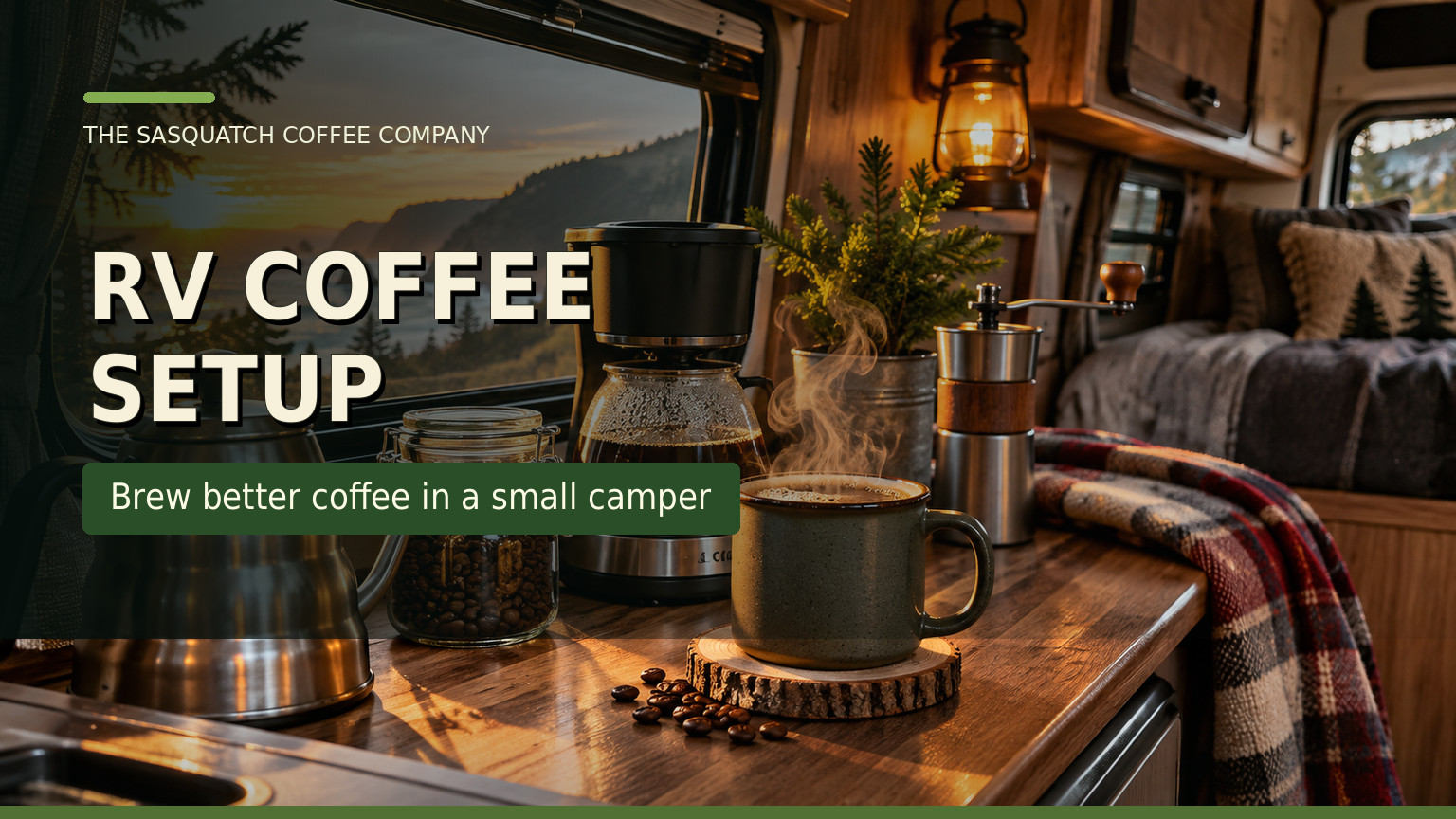
A great RV coffee setup doesn’t need a countertop full of machines. Whether you travel in a small camper, a van or a larger motorhome, the best setup is the one you can use half-asleep, clean in minutes and secure before you hit the road. A little planning helps you keep the first cup of the day enjoyable without sacrificing storage space.
Quick answer: Start with one compact brewer, a reliable way to heat water, pre-measured coffee, a spill-resistant mug and a designated place for wet grounds. Choose equipment that suits your electrical system and the number of people traveling.
Choose an RV coffee maker that fits your space
Pour-over: A simple dripper and filters are compact and inexpensive to store. You control each cup, but need space for a kettle and a stable spot to brew.
French press: Useful when making two or more servings at once, with no disposable filter required. Look for a durable model that is easy to wash; keep glass components secured during travel.
Small electric coffee maker: Convenient at full-hookup campgrounds. Check its wattage against your power setup and available outlets rather than assuming a compact machine draws little electricity.
Make-ahead cold brew: If you’re driving early and have safe refrigeration, an advance batch can save time. Our make-ahead cold brew guide shows a simple approach.
Set up a small coffee station
Assign one drawer or storage bin to coffee supplies. Put the kettle, grinder or measuring spoon, grounds, filters and cleanup kit together. A non-slip mat makes a useful work surface when the RV is parked level. Store heavy equipment low and never leave loose glass or hot appliances on an unsecured countertop while driving.
- One lidded container for beans or grounds
- A labeled scoop or compact scale
- One brewer and its necessary filters
- A stable kettle suitable for your heat source
- Insulated mugs with secure lids
- A sealable waste container and dishcloth
Plan your coffee before the drive
For a typical manual cup, use a starting ratio near one gram of coffee per 16–18 grams of brewing water. If you’re brewing 500 mL, that’s roughly 28–31 grams of grounds. Adjust for the brewer and your taste, and consult our coffee-to-water ratio chart if you need larger or smaller quantities.
Pre-measuring each morning’s dose saves space and reduces spills. Keep coffee cool, dry and tightly sealed instead of leaving a half-open bag next to the stove or on a sunlit dashboard.
What about making coffee off-grid?
Off-grid travelers should calculate power needs before choosing an electric coffee machine. A manual dripper or French press only needs hot water, but the kettle still needs a safe heat source. Never operate a portable gas camp stove inside an RV or enclosed space unless the specific permanently installed appliance and ventilation setup are designed and approved for that use. The CDC warns against using portable gas camp stoves indoors because of carbon monoxide danger. Follow the appliance instructions and use proper ventilation and carbon monoxide detectors.
Keep cleanup simple
Allow hot equipment to cool before stowing it. Scrape used coffee grounds into a trash container, not the sink drain, and use campground facilities for washing where available. Follow local rules for graywater and wastewater. Before driving, check that mugs, beans and equipment are dry and secure.
Best Sasquatch Coffee choices for an RV trip
For a morning cup with medium-dark depth, pack Feelin’ Squatchy. If you prefer a light breakfast coffee, try Eye Shine. And if you enjoy an evening coffee ritual without a regular caffeine load, Sleeping Giant Decaf makes a useful second option.
RV coffee FAQ
What’s the simplest coffee maker for a small camper?
A compact pour-over dripper is easy to store, but a durable French press can be more convenient for two people. Pick the method that needs the least equipment for your routine.
Should I bring whole beans or ground coffee?
Whole beans offer flexibility if you carry a grinder; pre-ground portions are simpler for short trips. Keep either one tightly sealed and dry.
Can I pour coffee grounds into the RV sink?
Don’t. Grounds can build up in plumbing and holding tanks. Collect and dispose of them with approved waste instead.
Fuel your next adventure: Add Feelin’ Squatchy coffee to the packing list and give your camper a coffee corner that works wherever you park.