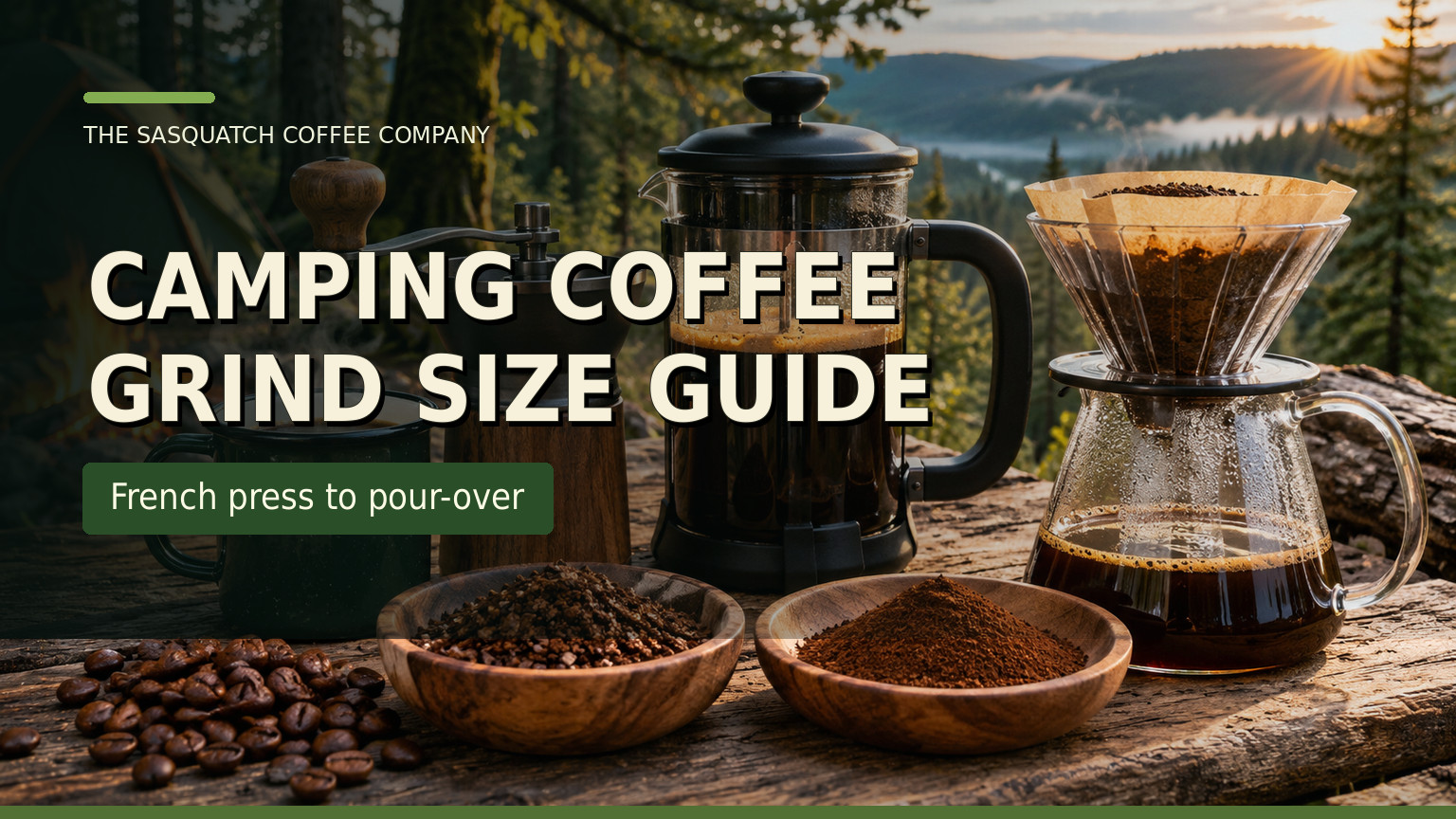
Ever packed great beans for a camping trip only to make a cup that tastes muddy, harsh or surprisingly weak? The grind size may be the missing piece. Coffee particles control how quickly water moves around the grounds and how much flavor is extracted. Match the grind to the brewing method, and your outdoor coffee becomes much easier to repeat.
Quick answer: Use a coarse grind for French press, percolator and most cold brew; start with a medium grind for pour-over. These descriptions are starting points, not universal grinder settings. Adjust by taste and brew performance.
Camping coffee grind size chart
| Brewing method | Starting grind | What to watch |
|---|---|---|
| French press | Coarse | Too much sediment or very fast extraction |
| Pour-over | Medium | Draining too quickly or slowly |
| Camp percolator | Coarse | Grounds slipping through the basket |
| Cold brew | Coarse | Ease of filtering after steeping |
Why grind size changes flavor
A finer grind exposes more surface area to water. It can accelerate extraction, and in a filter brewer it may also slow the flow. Coarser coffee generally extracts more slowly, but the brewer, agitation, water temperature and total contact time also matter. Research discussed by the Specialty Coffee Association emphasizes how grind and brewing conditions affect the resulting extraction.
This is why a grind that tastes excellent in a French press may behave badly in a pour-over dripper. The method changes how water meets the coffee.
French press: start coarse
A coarse grind helps reduce the fine sediment that can slip around the filter screen. Start near four minutes of steeping, press gently and pour the coffee into mugs after brewing. If the cup tastes thin, try a slightly finer grind before increasing the dose. If it’s gritty, go coarser or check your filter.
Pour-over: start medium
Pour-over depends on water moving through the coffee bed at a consistent rate. If the brew finishes very quickly and tastes weak, a slightly finer grind may help. If it stalls or tastes harsh, try a coarser setting. Keep the coffee dose and pouring pattern consistent while testing.
Percolator: coarse and controlled heat
Percolators cycle hot water repeatedly through a basket of grounds. A coarse grind keeps more particles in the basket, but grind alone won’t save a pot left at a violent boil. For better results, follow our camp percolator brewing guide and control the time and heat.
Cold brew: coarse for easier filtering
Cold brew steeps longer and at lower temperatures than hot brewing. Coarse grounds are easier to strain, especially when you’re making a batch before a road trip. Our make-ahead camp cold brew recipe includes a simple starting formula.
How to fix a bad cup by changing one variable
- Thin and weak: Try a slightly finer grind or a longer contact time, but only change one at a time.
- Harsh and astringent: Try a coarser grind or shorter contact time.
- Muddy or gritty: Check for too many fine particles and review your filter setup.
- Inconsistent from day to day: Measure both water and coffee, then document the grind setting.
Should you grind at home or at camp?
Pre-ground coffee saves weight and steps, especially for short backpacking trips. Fresh grinding gives you more control when you’ve got a car-camping kitchen or multi-day base camp. Store either form sealed and dry, away from heat and moisture.
Camp grind size FAQ
Can I use one grind for all brewers?
You can experiment, but a one-size-fits-all grind is a compromise. Coarse French press grounds may flow too quickly through some drippers, while fine drip coffee creates sediment in a press.
Does darker roast require a different grind?
You may need to adjust settings as you change beans, but brewer performance and cup taste should guide the decision, not roast color alone.
What’s a good starting coffee ratio?
Try roughly one gram of ground coffee to 16–18 grams of water, using our camp coffee ratio chart for batch sizes.
Test your grind with Feelin’ Squatchy for a full-bodied camp cup or Eye Shine for a lighter start. Good gear helps; consistent technique makes the difference.