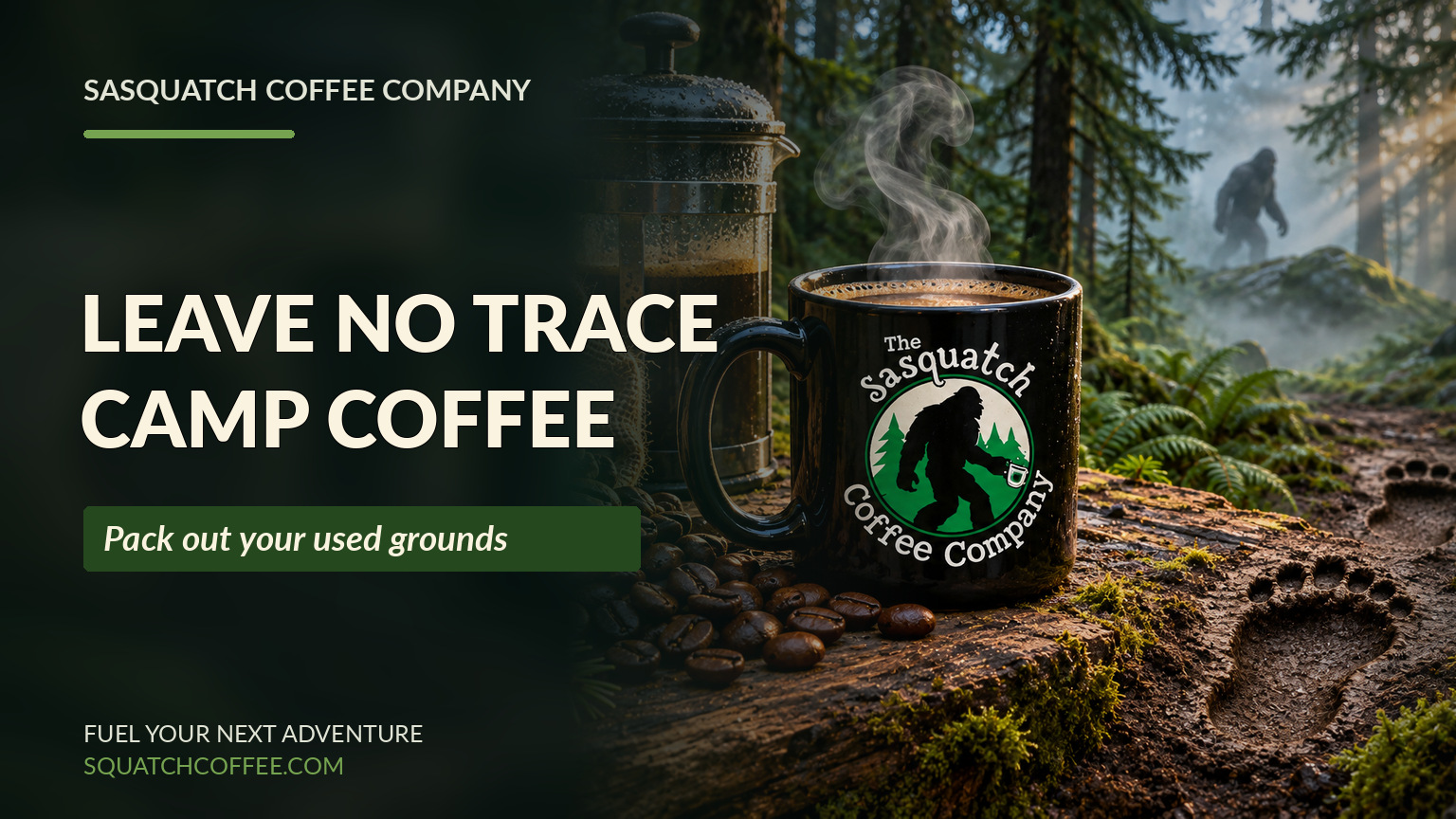
A fresh mug in the woods feels like part of the outdoor experience. But when you’re finished, what should happen to the grounds? Many campers assume coffee grounds are harmless because they’re biodegradable. In a wild campsite, however, biodegradable does not mean leave-behind.
The short answer: Pack out your used coffee grounds and filters. Keep them out of fire pits, streams, lakes and trails, and follow local requirements for wastewater and food storage.
Why coffee grounds belong in your trash bag
Coffee grounds are food waste. Scattering them around camp can leave an odor, attract wildlife and make the campsite less pleasant for the next visitor. They also don’t vanish overnight. The Leave No Trace principles explicitly call for packing out food scraps and disposing of waste properly.
The National Park Service’s food-storage guidance also warns not to burn coffee grounds or other food waste in a campfire. Partially burned scraps may still attract wildlife.
Pack out coffee grounds in five steps
- Let grounds cool. Never seal steaming-hot grounds in a fragile plastic bag.
- Use a dedicated container. A small rigid tub or sturdy sealable bag keeps damp grounds from leaking into the pack.
- Capture filters. Used paper filters are not something to leave behind, even if marketed as compostable.
- Store the waste securely. Treat it as scented food trash wherever wildlife-safe storage is required.
- Dispose of it properly. Use an approved trash receptacle or take the waste home.
What about washing out your French press or percolator?
First, scrape and strain as many solid particles as possible into your waste container. If a campground provides a dishwashing sink or designated graywater station, use it. Where backcountry wastewater disposal is allowed, follow the managing agency’s directions—often involving straining, using a location well away from water and spreading liquid rather than dumping it in one spot.
In sensitive places and parks with stricter rules, you may need to pack out wastewater as well. Check the rules before leaving and never pour coffee, oily dishwater or grounds directly into a lake or stream.
Make your coffee kit easier to clean
- Measure the amount you’ll drink so you produce less leftover coffee.
- Use a reusable brewer that is easy to scrape and rinse.
- Bring a small spatula, a reusable strainer and a sealable waste container.
- Keep clean water and waste water in clearly separate containers.
- Wash and dry equipment fully when you return home.
If you need less equipment, pre-measure the grounds for your trip and use our camping coffee ratio chart to avoid making more coffee than you need.
Does using coffee grounds as fertilizer make sense outdoors?
At home, coffee grounds may be part of a managed composting system. That’s different from scattering food waste in forests, parks or fragile alpine environments. A backcountry campsite is not a compost bin, and the surrounding plants and animals don’t benefit from visitors leaving waste behind.
Leave No Trace coffee FAQ
Can I throw grounds into the campfire?
No. Food scraps often don’t burn completely in a normal fire and can still attract animals.
Can I bury the grounds?
Do not assume burial is allowed. Packing out food waste is the more dependable option and may be required by the land manager.
What about coffee in the lake?
Keep coffee and grounds out of natural waterways. Follow local rules for liquid waste and use designated facilities whenever available.
We love wild places and want to keep them wild. Bring your favorite Sasquatch Coffee on the adventure—and bring the grounds home with you.